
How to perform Umrah
The Complete Sunnah Guide to Umrah
دَلِيلُ العُمْرَةِ عَلَى السُّنَّة
An authentic, step-by-step walkthrough covering every pillar, supplication and practical requirement from the miqat to completion.
Before you begin
The virtues of Umrah — فَضْلُ العُمْرَة
A journey of mercy, reward and closeness to Allah.
Forgiveness of sins
“And complete the Hajj and 'Umrah for Allah.”
Qur'an 2:196
Expiation between each Umrah
“An Umrah to Umrah is an expiation for the sins committed between them.”
Sahih Muslim 1349
Removes poverty
“Follow up the Hajj with an Umrah, for indeed they remove poverty and sins.”
Sunan an-Nasa'i 2631
A great reward
“The reward for an accepted Hajj is nothing less than Paradise” — and an accepted Umrah wipes away sins.
Sahih al-Bukhari 1773
Prayer in Masjid al-Haram
“A prayer in Masjid al-Haram is better than one hundred thousand prayers elsewhere.”
Ibn Majah 1406
Prayer in Masjid an-Nabawi
“A prayer in this mosque of mine is better than a thousand prayers elsewhere, except Masjid al-Haram.”
Sahih al-Bukhari 1190
Closer to Allah
“And strive for Allah with the striving due to Him.”
Qur'an 22:78
Umrah in summary — العُمْرَة
- 1. Ihram — الإِحْرَام
- 2. Tawaf — الطَّوَاف
- 3. Sa'y between Safa & Marwah — السَّعْي
- 4. Halq or Taqseer — الحَلْق أَو التَّقْصِير
Step 1
Preparation and entering ihram — الإِحْرَام
Everything that must happen before you cross the miqat boundary.
Core prerequisites and the miqat
- Umrah is wajib (واجب) once in a lifetime for those financially and physically capable.
- The intention (an-niyyah — النِّيَّة) must precede the action.
- You cannot perform Umrah on behalf of another person until your own obligation is fulfilled.
- You must enter ihram at or before your designated miqat — for example Dhul-Hulayfah (ذُو الحُلَيْفَة) from Madinah, or while airborne on international flights.
- Passing the boundary without ihram to change at a Makkah hotel is not permissible.
Preparation checklist (sunnah acts)
- Perform a full body wash (ghusl — غُسْل).
- Personal grooming: trim the nails and groom the moustache.
- Apply perfume ('itr — عِطْر) to the body only, before the intention is declared.
Where to make your intention
The mawaqit and how they apply when you fly
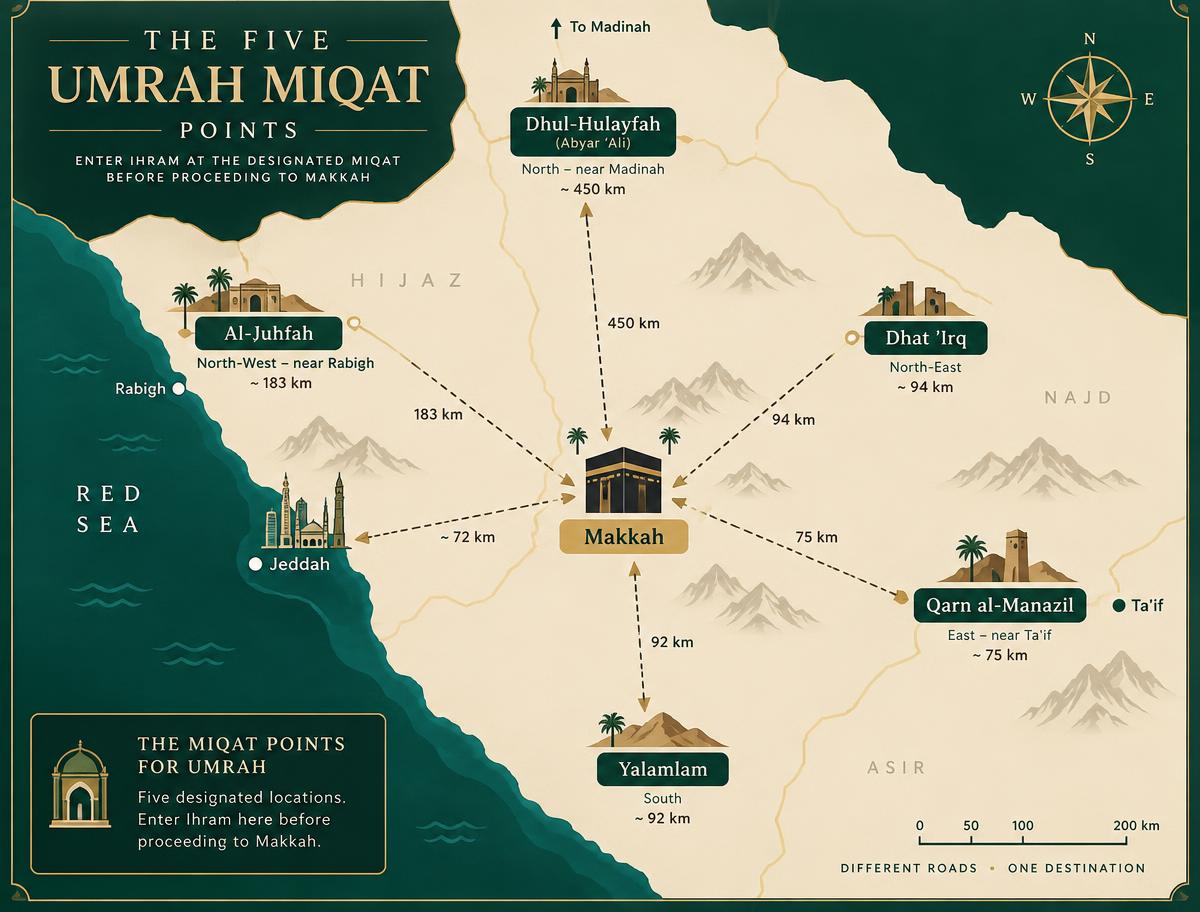
Ibn 'Abbas (may Allah be pleased with him) reported that the Prophet ﷺ appointed Dhul-Hulayfah for the people of Madinah, Al-Juhfah for the people of Sham, Qarn al-Manazil for the people of Najd and Yalamlam for the people of Yemen, saying: "They are for them and for anyone who comes through them intending Hajj or Umrah."(Sahih al-Bukhari 1524, Sahih Muslim 1181; Dhat 'Irq was later appointed for the people of Iraq — Sahih Muslim 1183.)
The ruling follows the boundary, not the airport. Whoever passes a miqat — on the ground or in the air above it — intending Umrah must already be in ihram with the niyyah made.
- Do ghusl, grooming and perfume at home or at your departure airport, and put on the ihram garments before you board (or change on board before the announcement).
- Your flight path crosses one of the miqat lines in the air — usually Yalamlam or Qarn al-Manazil coming from the east, or Al-Juhfah / Rabigh coming from the north and west.
- The captain or cabin crew normally announce the miqat roughly 20–30 minutes before the aircraft passes over it. Treat that announcement as your cue.
- Make the niyyah and say 'Labbayka Allahumma 'Umrah' at that point — while seated is fine — then begin the talbiyah.
- Do not delay the intention until you land: Jeddah lies inside the boundary, and passing the miqat without ihram requires you to go back or offer a dam (a sacrifice) according to the majority of scholars.
- If you are unsure of the timing, it is safer to make the intention a little early rather than late.
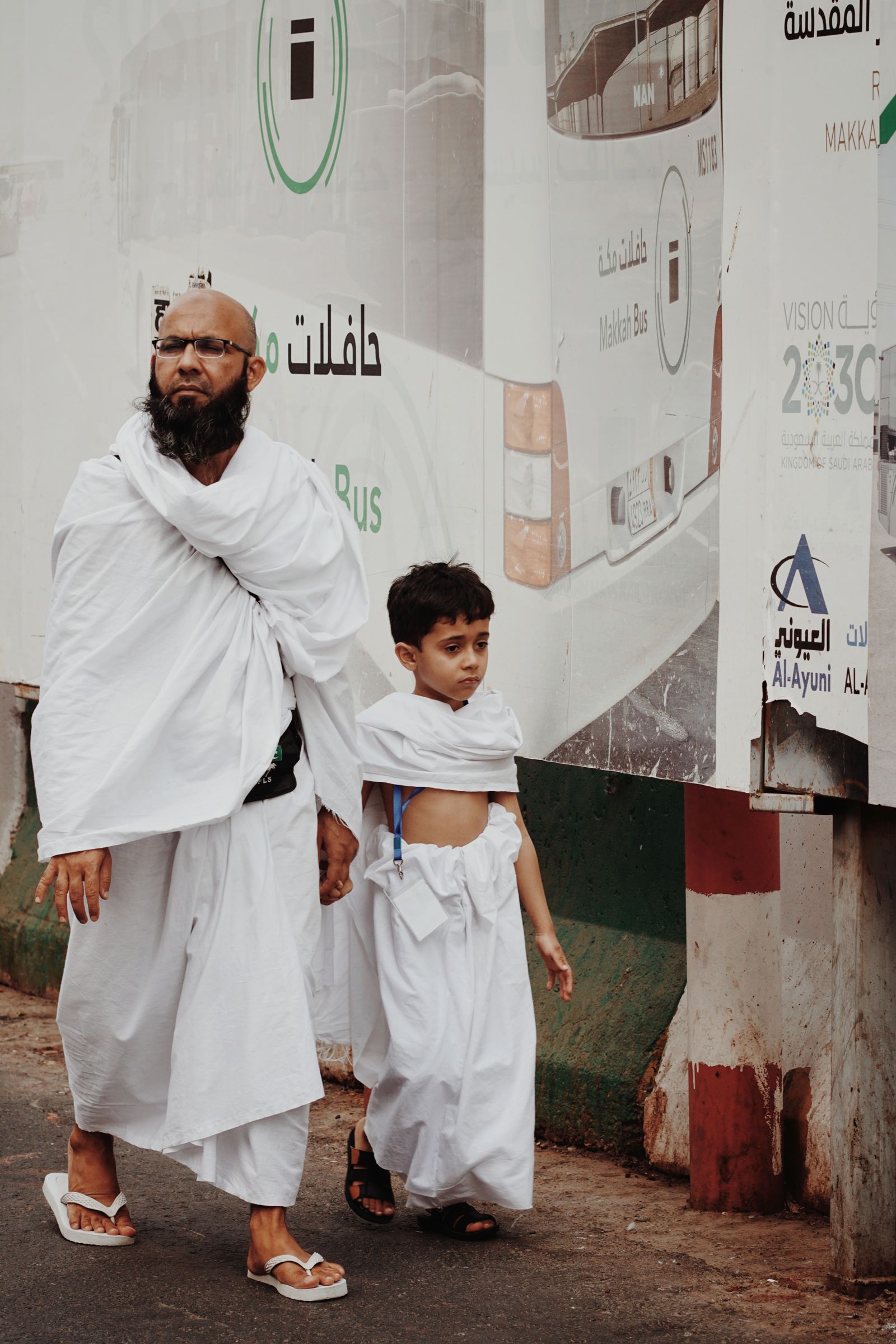
Ihram garments by gender
- Lower garment: izar (إِزَار), wrapped around the waist.
- Upper garment: rida' (رِدَاء), draped over the shoulders.
- Fabric must be unstitched — no head coverings and no stitched undergarments.
The intention — النِّيَّة
لَبَّيْكَ اللَّهُمَّ عُمْرَةً
Labbayka Allahumma 'Umrah
Here I am at Your service, O Allah, for Umrah.
The conditional clause — الِاشْتِرَاط
اللَّهُمَّ مَحِلِّي حَيْثُ حَبَسْتَنِي
Allahumma mahilli haythu habastani
O Allah, my place of exiting ihram is wherever You have prevented me. Use this if you fear illness, a cancelled flight or the onset of menses.
Prohibitions of ihram
- No scented soaps, lotions or perfumes.
- No cutting hair or clipping nails.
- No marital relations.
Hadith of the mawaqeet
عن ابن عباس قال: إن النبي ﷺ وقّت لأهل المدينة ذا الحليفة، ولأهل الشام الجحفة، ولأهل نجد قرن المنازل، ولأهل اليمن يلملم، هن لهن ولمن أتى عليهن من غيرهن ممن أراد الحج والعمرة، ومن كان دون ذلك فمن حيث أنشأ، حتى أهل مكة من مكة
Ibn 'Abbas said: the Prophet ﷺ appointed Dhul-Hulayfah for the people of Madinah, Al-Juhfah for Sham, Qarn al-Manazil for Najd and Yalamlam for Yemen. They are for them and for whoever passes through them intending Hajj or Umrah; whoever lives within them enters ihram from where he sets out, and the people of Makkah from Makkah.
Sahih al-Bukhari & Sahih Muslim
| Miqat | For those coming from | Distance from Makkah |
|---|---|---|
| Dhul-Hulayfahذُو الحُلَيْفَةAlso: Abyar 'Ali | Coming from Madinah | ~255 miles north |
| Al-JuhfahالجُحْفَةAlso: Rabigh (127 miles) | North Africa, Syria, Europe (by land) | 116 miles north-west |
| Dhat 'Irqذَات عِرْقAlso: Al-Dhareeba | Coming from Iraq | 55 miles north-east |
| Qarn al-Manazilقَرْن المَنَازِلAlso: As-Sayl al-Kabeer / Wadi Mahram | Najd (Riyadh), UAE | 50 miles east |
| YalamlamيَلَمْلَمAlso: As-Sa'diyah | Coming from Yemen | 80 miles south |
Who enters ihram where
- Coming from outside (UK, Europe, Africa, Madinah): at the miqat — or just before it when flying.
- Living inside the mawaqeet but outside the Haram: from your own place.
- Already in Makkah (e.g. a second Umrah): go out to the nearest point outside the Haram, such as Masjid 'A'ishah at Tan'eem or Ji'ranah.
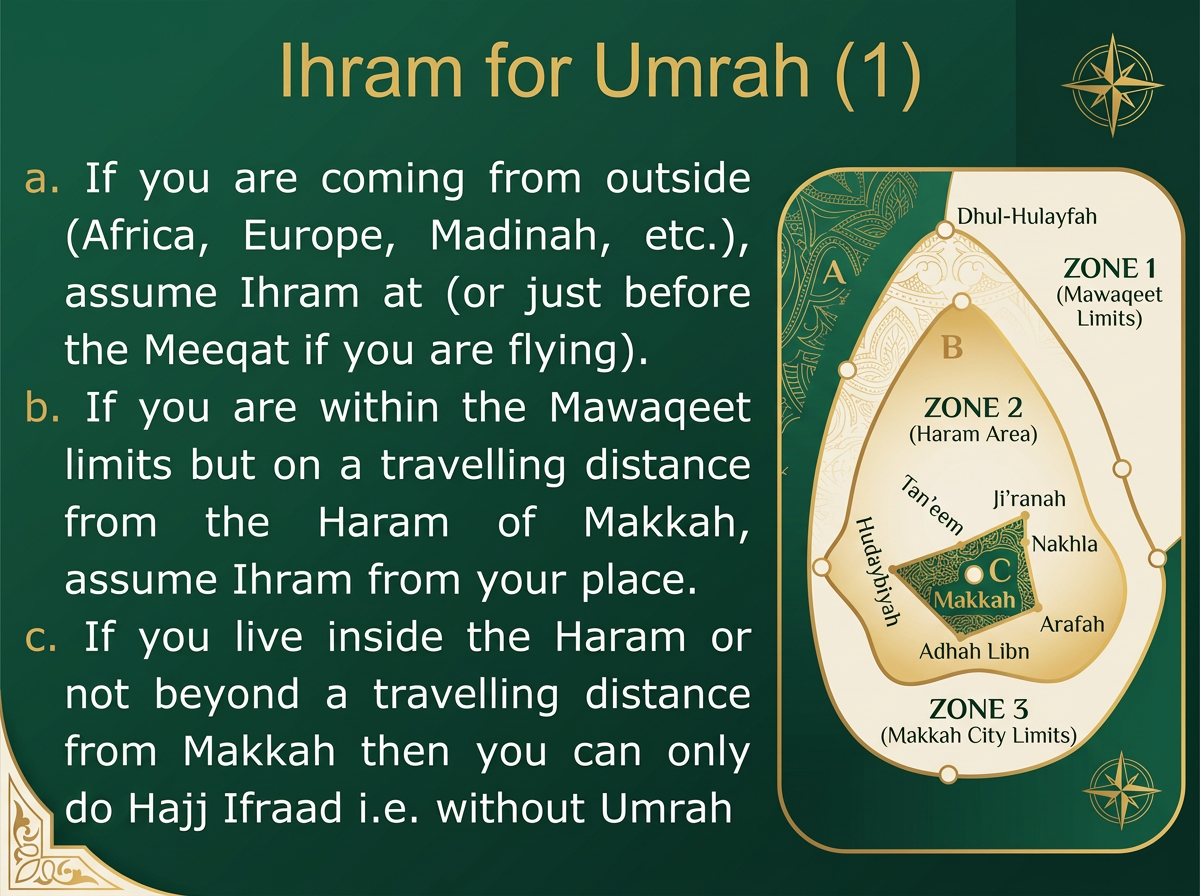
The Haram of Makkah — حَرَم مَكَّة
The sanctified area around Makkah was marked out by Ibrahim (عليه السلام) under the guidance of Jibreel. After the conquest of Makkah the Prophet ﷺ sent Tameem ibn Asad al-Khuza'i to renew its boundaries, and today flags on the hills show its limits. Area about 550 km² (212 mi²); perimeter about 127 km (79 mi).
Restrictions in the Haram (all year, in ihram or not)
- Its plants must not be cut, except idhkhir (a scented grass).
- Its game must not be scared or hunted. In ihram, hunting requires an equivalent animal as expiation.
- Lost property must not be picked up except to hand it in at Lost & Found or announce it.
- Weapons must not be carried for fighting.
- These also apply in the Haram of Madinah.
Preparing for ihram (before you begin)
- Ghusl (a full shower) is sunnah — for women too, even during menses or post-natal bleeding.
- Clip the moustache and nails, remove pubic and armpit hair. Unscented Vaseline is fine.
- Men may perfume the head and beard, but not the ihram garments.
- Men put on the two ihram sheets: rida' (upper) and izar (lower) — رِدَاء وَإِزَار.
- Pray the fard prayer if it is due. Two rak'ahs specifically for ihram are only reported at Dhul-Hulayfah.
- Your intention was already made when you decided to do Umrah — everything so far is only preparation.
Say this to begin ihram (standing, facing the qiblah)
لَبَّيْكَ اللَّهُمَّ بِعُمْرَة
Labbayk Allahumma bi-'Umrah
Here I am, O Allah, for Umrah. From this moment you are in ihram — like the opening takbir of the prayer.
Recommended straight after
اللَّهُمَّ عُمْرَةً لَا رِيَاءَ فِيهَا وَلَا سُمْعَة
Allahumma 'umratan la riya'a fiha wa la sum'ah
O Allah, an Umrah with no showing off and no seeking of fame.
Other talbiyahs the Companions added
لَبَّيْكَ ذَا المَعَارِجِ، لَبَّيْكَ ذَا الفَوَاضِل — لَبَّيْكَ وَسَعْدَيْكَ، وَالخَيْرُ بِيَدَيْكَ، وَالرَّغْبَاءُ إِلَيْكَ وَالعَمَل — لَبَّيْكَ إِلَهَ الحَقّ
Labbayka dhal-ma'arij, labbayka dhal-fawadil — Labbayka wa sa'dayk, wal-khayru bi-yadayk, war-raghba'u ilayka wal-'amal — Labbayka ilahal-haqq
Here I am, Lord of the ascending ways and of bounties. Here I am, ready to serve You; all good is in Your hands; to You is our longing and our deeds. Here I am, God of truth. (Keeping to the main talbiyah is best; mixing it with «لا إله إلا الله» is also fine.)
How to say the talbiyah
- Men say it aloud — especially going up and down hills. Saying it quietly is against the Sunnah.
- The Companions' voices were hoarse by ar-Rawha', only 36 miles from the Madinah miqat.
- Say it individually — chanting in a group is not from the Sunnah.
- For Umrah, continue until you reach the Haram boundary / Makkah; you may carry on until the Masjid if everything is arranged for you.
- Women may say it aloud too ('A'ishah did), unless it may cause fitnah.
Raise your voices
إِنَّ جِبْرِيلَ أَتَانِي فَأَمَرَنِي أَنْ آمُرَ أَصْحَابِي أَنْ يَرْفَعُوا أَصْوَاتَهُمْ بِالإِهْلَال
“Jibreel came to me and told me to order my Companions to raise their voices with the talbiyah.” Every rock and tree to the right and left of the one saying talbiyah responds with him.
Ahmad & at-Tirmidhi; Ibn Majah
Prohibitions of ihram — مَحْظُورَات الإِحْرَام
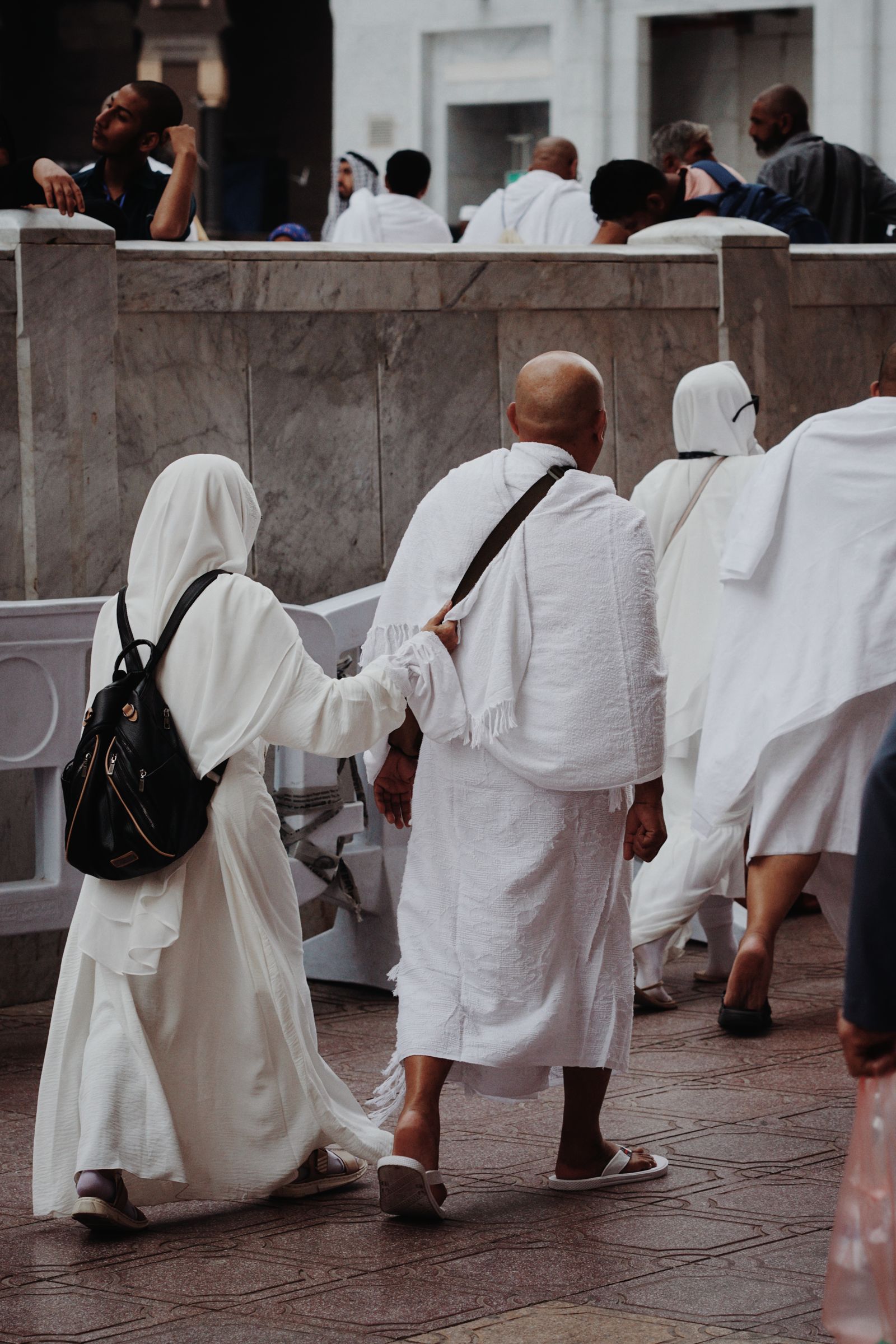
- Men: no clothing cut to fit the limbs (shirts, trousers, underwear, socks), no head covering touching the head, no gloves.
- Women: normal modest clothes of any colour, but no niqab or gloves. A cloth may be dropped over the face in front of men, without tying it.
- No perfume on the body or clothing after entering ihram (what remains from before is fine).
- No removing hair from any part of the body and no clipping nails.
- No marital relations, no marriage contract or proposal.
- No hunting or helping to hunt. Harmful creatures (snakes, scorpions, mice) may be killed. Fishing is allowed.
Permissible in ihram
- Shade from an umbrella, car roof or tent; carrying a bag or backpack.
- Sandals that leave the ankles uncovered (or shoes if that is all you have).
- If cold, draping normal clothes over you without putting your arms through the sleeves.
- A ring, watch, glasses, contact lenses, hearing aid, and a money belt (even stitched).
- Washing, even with scented soap, and scratching — if a hair falls unintentionally, no harm.
- Washing or changing your ihram sheets; wearing a face mask for dust or illness.
- Touching the Ka'bah or shaking hands with someone perfumed.
Common mistakes in ihram
Crossing the miqat without ihram.
This leaves out an obligation (wajib).
Thinking ihram is just putting on the two sheets.
The essence of ihram is the intention to begin Umrah.
Thinking two rak'ahs before ihram are always sunnah.
Only reported when entering ihram at Dhul-Hulayfah.
Thinking ghusl or wudu is a condition of ihram.
It is sunnah; ihram is valid without it.
Keeping the right shoulder uncovered throughout.
Idtiba' is only during the arrival tawaf.
Thinking anything with stitching is forbidden.
Only garments cut to fit the limbs are forbidden.
A woman on her period not entering ihram at the miqat.
She enters ihram; the only rite she delays is tawaf.
Thinking women need white or special clothes.
Women just leave the face and hands uncovered.
Stopping an Umrah halfway.
Once ihram is entered, it must be completed.
Step 2
The journey to Makkah and entering the sanctuary
From the talbiyah at the miqat to your first steps inside Al-Masjid Al-Haram.
The talbiyah — التَّلْبِيَة
Chant continuously from the miqat until your eyes first fall on the Ka'bah.
Talbiyah
لَبَّيْكَ اللَّهُمَّ لَبَّيْكَ، لَبَّيْكَ لَا شَرِيكَ لَكَ لَبَّيْكَ، إِنَّ الحَمْدَ وَالنِّعْمَةَ لَكَ وَالمُلْك، لَا شَرِيكَ لَكَ
Labbayk Allahumma Labbayk, Labbayka Laa Shareeka Laka Labbayk, Innal-Hamda Wan-Ni'mata Laka Wal-Mulk, Laa Shareeka Lak
Here I am at Your service, O Allah, here I am. Here I am, You have no partner, here I am. Verily all praise, grace and sovereignty belong to You. You have no partner.
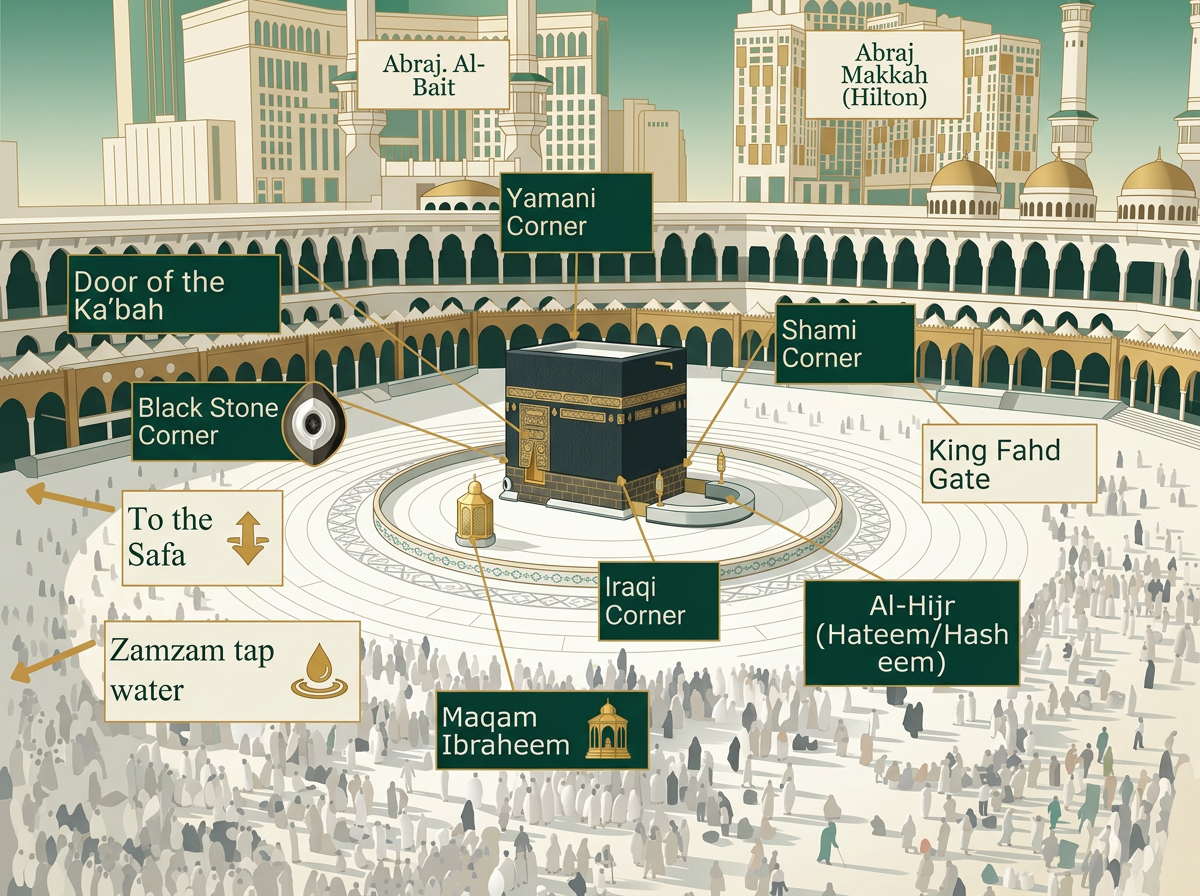
Entering Al-Masjid Al-Haram — دُخُول المَسْجِد الحَرَام
- Step forward with the right foot.
- Recite the mosque entrance supplication.
Practical tip: keep your shoes in a drawstring bag and carry them with you — never leave them at a crowded threshold.
Entering the mosque
بِسْمِ اللهِ، وَالصَّلَاةُ وَالسَّلَامُ عَلَى رَسُولِ اللهِ، اللَّهُمَّ افْتَحْ لِي أَبْوَابَ رَحْمَتِكَ
Bismillah, was-salatu was-salamu 'ala Rasulillah, Allahummaftah li abwaba rahmatik
In the name of Allah; prayers and peace be upon the Messenger of Allah. O Allah, open for me the doors of Your mercy.
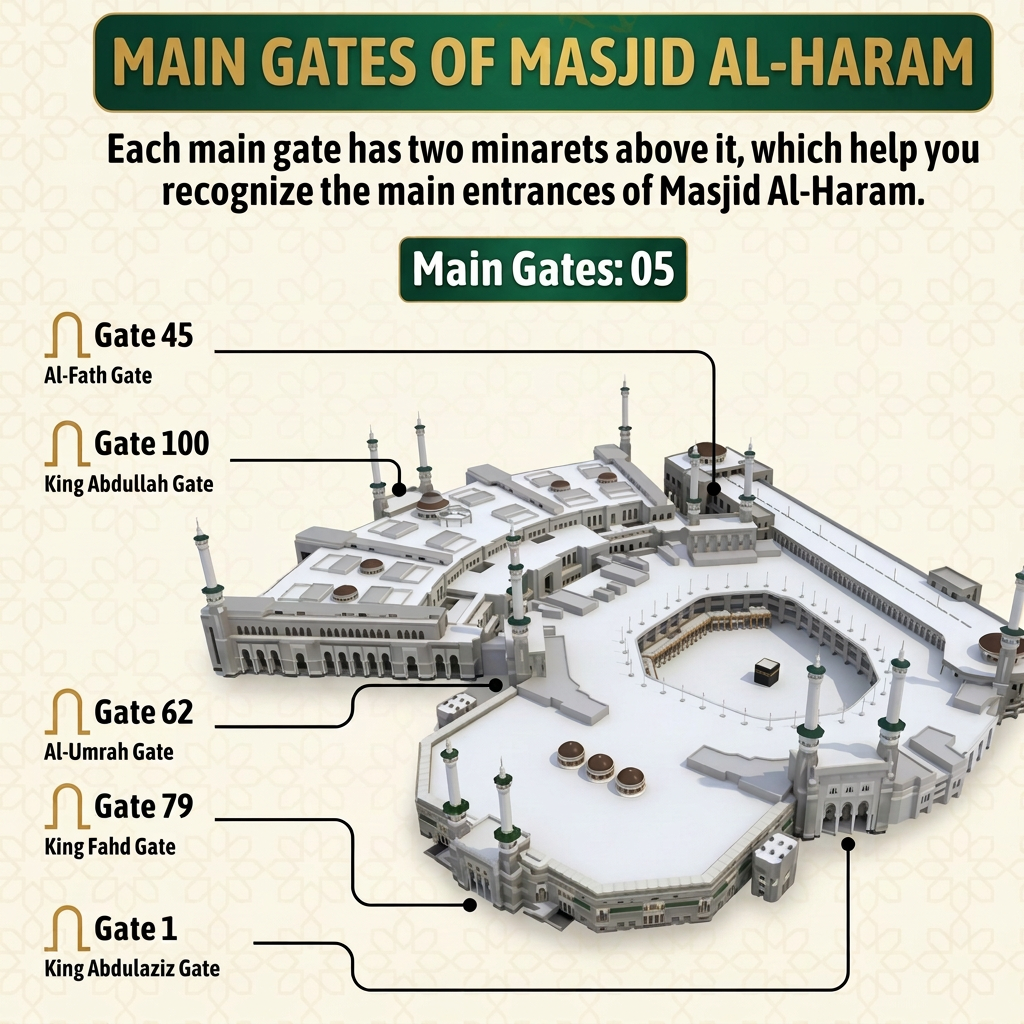
Arriving at Al-Masjid Al-Haram
- A ghusl before entering Makkah is sunnah if possible.
- The Prophet ﷺ entered through the Bani Shaybah gate, but you may enter from any gate.
- Enter with the right foot first and say the du'as below.
- When you see the Ka'bah you may raise your hands (reported from Ibn 'Abbas). No specific du'a is authentically reported from the Prophet ﷺ.
Seeking refuge on entering
أَعُوذُ بِاللهِ العَظِيمِ، وَبِوَجْهِهِ الكَرِيمِ، وَسُلْطَانِهِ القَدِيمِ، مِنَ الشَّيْطَانِ الرَّجِيم
A'udhu billahil-'adheem, wa bi-wajhihil-kareem, wa sultanihil-qadeem, minash-shaytanir-rajeem
I seek refuge with Allah the Supreme, with His Noble Face and His eternal authority, from the accursed devil.
Abu Dawud
On seeing the Ka'bah (du'a of 'Umar)
اللَّهُمَّ أَنْتَ السَّلَامُ وَمِنْكَ السَّلَامُ، فَحَيِّنَا رَبَّنَا بِالسَّلَام
Allahumma antas-salam wa minkas-salam, fa hayyina rabbana bis-salam
O Allah, You are Peace and from You is peace; so greet us, our Lord, with peace.
Step 3
Tawaf around the Ka'bah — الطَّوَاف
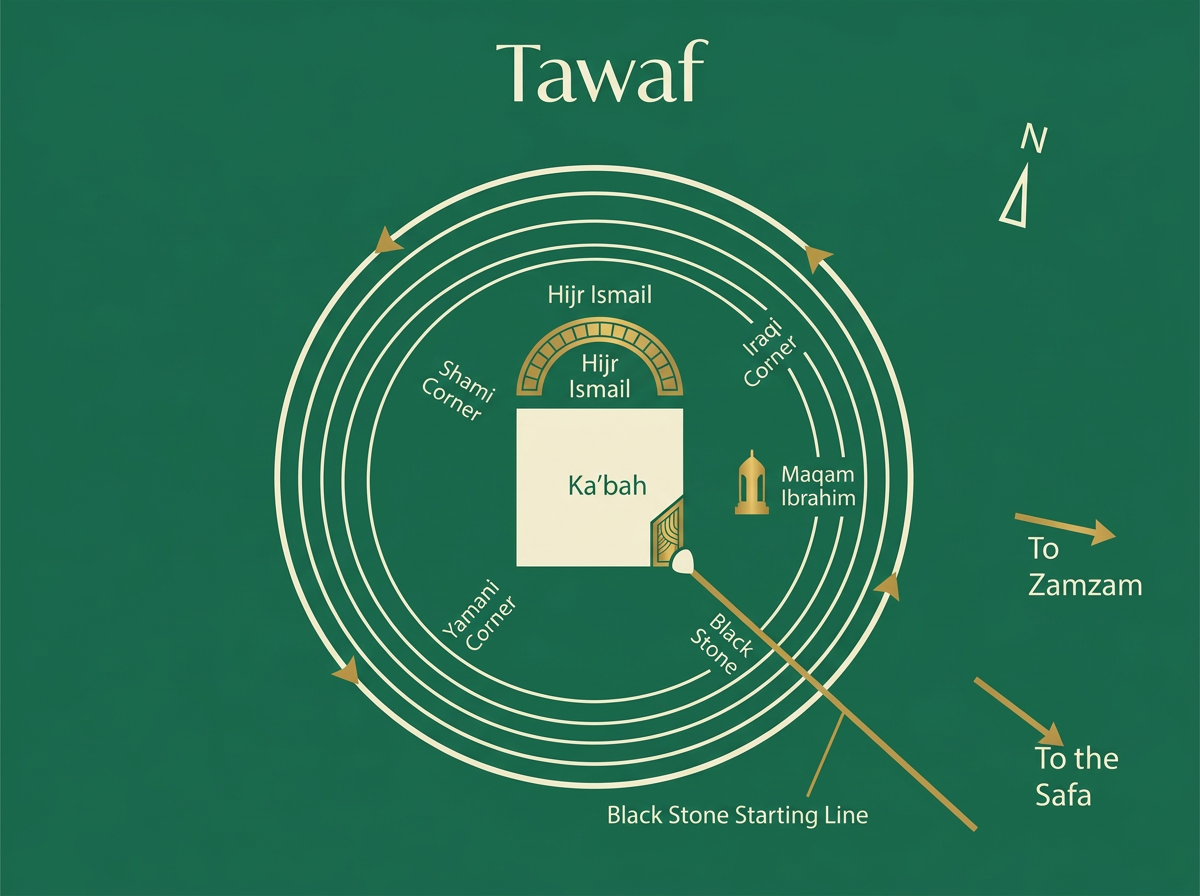
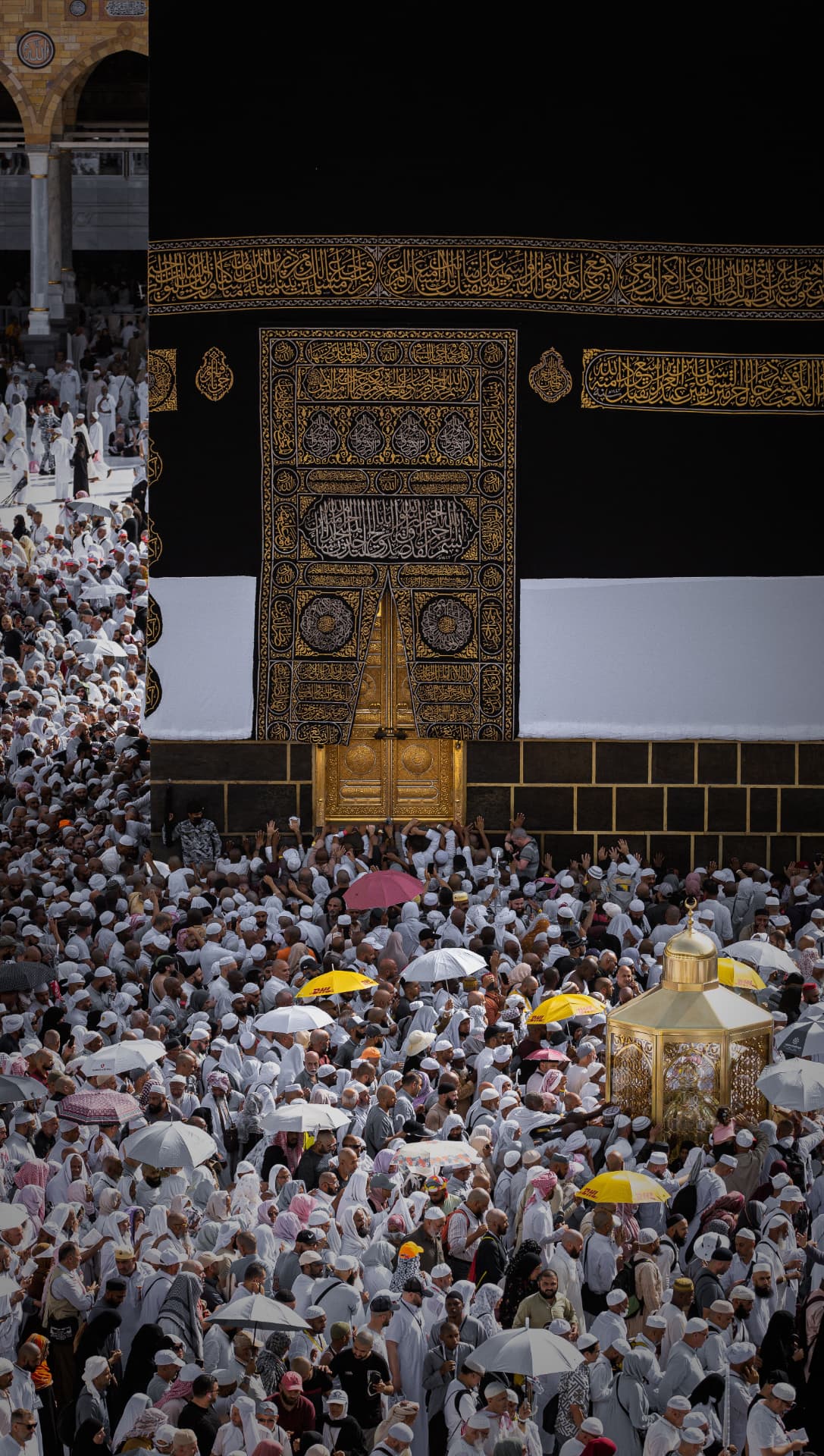
Seven circuits beginning and ending at the Black Stone line. Use the counter to keep track.
Tawaf circuits
Tap after each circuit at the Black Stone line.
Rules of tawaf
- Ritual purity (wudhu — وُضُوء) is required throughout. If it breaks, leave, perform wudhu and resume.
- Idtiba' (الاضْطِبَاع): men uncover the right shoulder by looping the upper garment under the right armpit and over the left shoulder.
- Begin at the Black Stone line (al-Hajar al-Aswad — الحَجَر الأَسْوَد) and move anticlockwise.
Circuit milestones
- Lap 1: raise the right hand towards the stone and say «بِسْمِ اللهِ وَاللهُ أَكْبَر» (Bismillah, Allahu Akbar).
- Laps 2 to 7: raise the right hand and say «اللهُ أَكْبَر» (Allahu Akbar).
- Never push or struggle to touch or kiss the stone — pointing from a distance fulfils the sunnah completely.
- There are no assigned lap-by-lap prayers: recite Qur'an, make personal du'a and seek forgiveness (istighfar — اسْتِغْفَار).
Between the Yemeni corner and the Black Stone
رَبَّنَا آتِنَا فِي الدُّنْيَا حَسَنَةً وَفِي الآخِرَةِ حَسَنَةً وَقِنَا عَذَابَ النَّارِ
Rabbana atina fid-dunya hasanatan wa fil-akhirati hasanatan wa qina 'adhaban-nar
Our Lord, give us in this world that which is good and in the Hereafter that which is good, and save us from the punishment of the Fire.
Two rak'ahs of tawaf — رَكْعَتَا الطَّوَاف
- Cover both shoulders immediately after the seventh circuit (end idtiba').
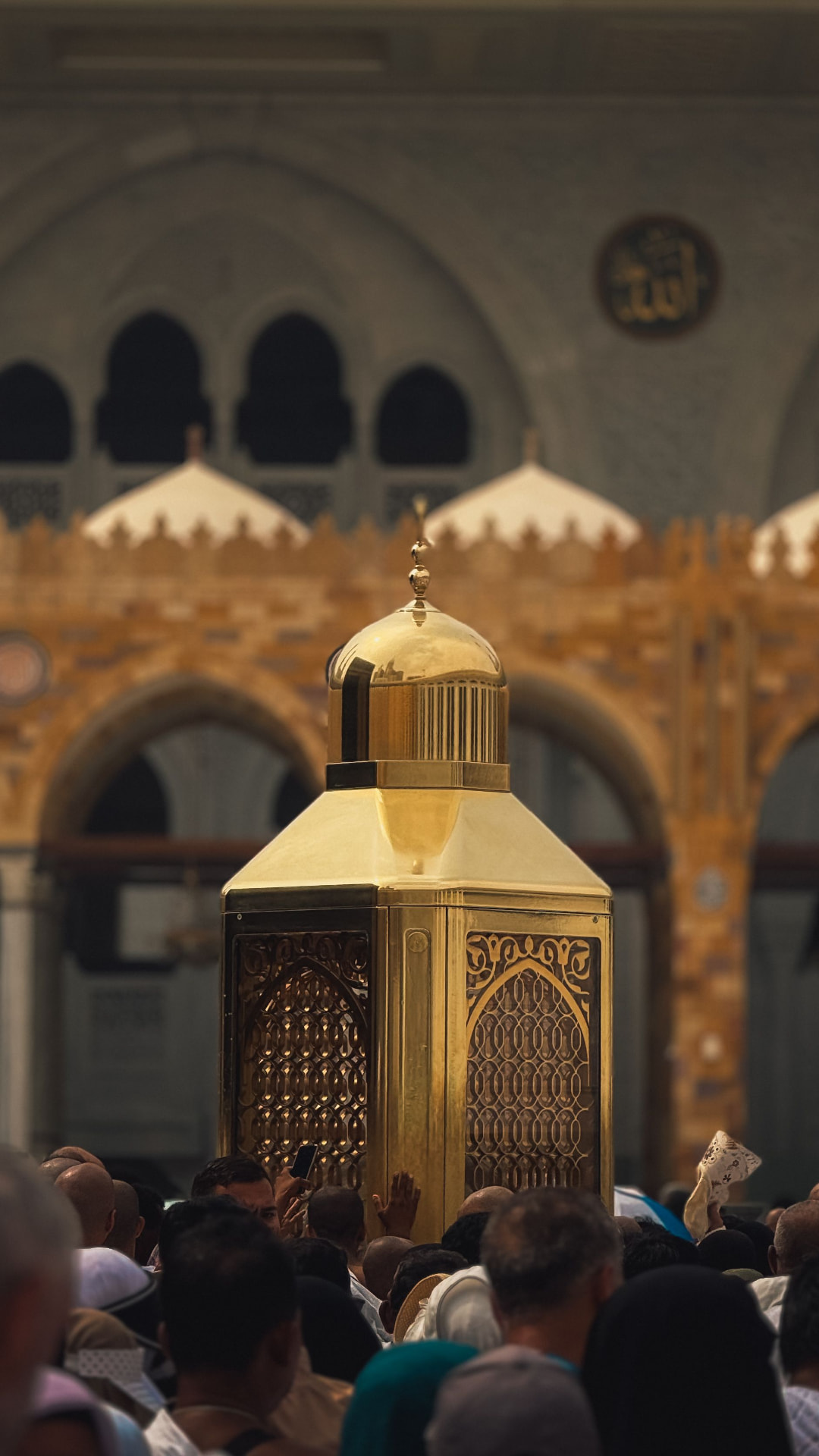
- Pray two short units behind Maqam Ibrahim (مَقَام إِبْرَاهِيم), or anywhere in the Haram if it is crowded.
- First rak'ah: Surah al-Fatihah and Surah al-Kafirun (سُورَة الكَافِرُون).
- Second rak'ah: Surah al-Fatihah and Surah al-Ikhlas (سُورَة الإِخْلَاص).
The Black Stone — الحَجَر الأَسْوَد
- Face it and say «الله أكبر» — you may add «بسم الله» before it (reported from Ibn 'Umar).
- If you can, touch it with the right hand and kiss it. If not, touch it and kiss your hand. If not, point towards it with your right hand.
- Do this at the start of every circuit.
- Touching it is not required for your tawaf to count. Never push — harming a Muslim is a great sin, while kissing the Stone is not obligatory.
Two sunnahs for men in the arrival tawaf
- Ar-Ramal (الرَّمَل): a brisk walk with short steps and shoulders forward, in the first three circuits only.
- Al-Idtiba' (الاضْطِبَاع): the upper sheet under the right armpit and over the left shoulder, for all seven circuits.
- Women walk normally and keep both shoulders covered.
Virtue of the Black Stone
لَيَبْعَثَنَّ اللهُ الحَجَرَ يَوْمَ القِيَامَةِ وَلَهُ عَيْنَانِ يُبْصِرُ بِهِمَا، وَلِسَانٌ يَنْطِقُ بِهِ، يَشْهَدُ عَلَى مَنِ اسْتَلَمَهُ بِحَقّ
“Allah will raise the Stone on the Day of Resurrection with two eyes to see and a tongue to speak, bearing witness for whoever touched it in truth.”
Ahmad, at-Tirmidhi & ad-Darimi
مَسْحُ الحَجَرِ الأَسْوَدِ وَالرُّكْنِ اليَمَانِيِّ يَحُطَّانِ الخَطَايَا حَطًّا
“Touching the Black Stone and the Yemeni Corner removes sins.”
At-Tirmidhi (hasan); Ibn Hibban & al-Hakim (sahih)
الحَجَرُ الأَسْوَدُ مِنَ الجَنَّةِ، وَكَانَ أَشَدَّ بَيَاضًا مِنَ الثَّلْجِ، حَتَّى سَوَّدَتْهُ خَطَايَا أَهْلِ الشِّرْك
“The Black Stone is from Paradise. It was whiter than snow until the sins of the idolaters turned it black.”
Ahmad & at-Tirmidhi
Rules of every tawaf
- Wudu is required. A woman on her period waits until she is clean.
- Seven circuits, then two rak'ahs behind Maqam Ibrahim.
- Keep the Ka'bah on your left — never walk with your back or right side to it, or backwards.
- Stay within Al-Masjid Al-Haram (upper floors count). Go outside the Hijr, as it is part of the Ka'bah.
- Touch the Yemeni Corner with the right hand if you can, without kissing it. If you can't, do not point or say takbir.
- Do not touch the Shami or Iraqi corners, or wipe the walls of the Ka'bah.
Interruptions and doubts
- There is no set dhikr per circuit — avoid booklets with a du'a for each lap. Recite Qur'an and make du'a from the heart, on your own.
- Keep going without long breaks unless necessary.
- When the iqamah is called, join the prayer where you are, then carry on from that spot.
- If you need the toilet, go, make wudu and resume from where you stopped.
- Unsure if you did 6 or 7? Count the lower number and add one.
- Doubts that come after finishing are ignored.
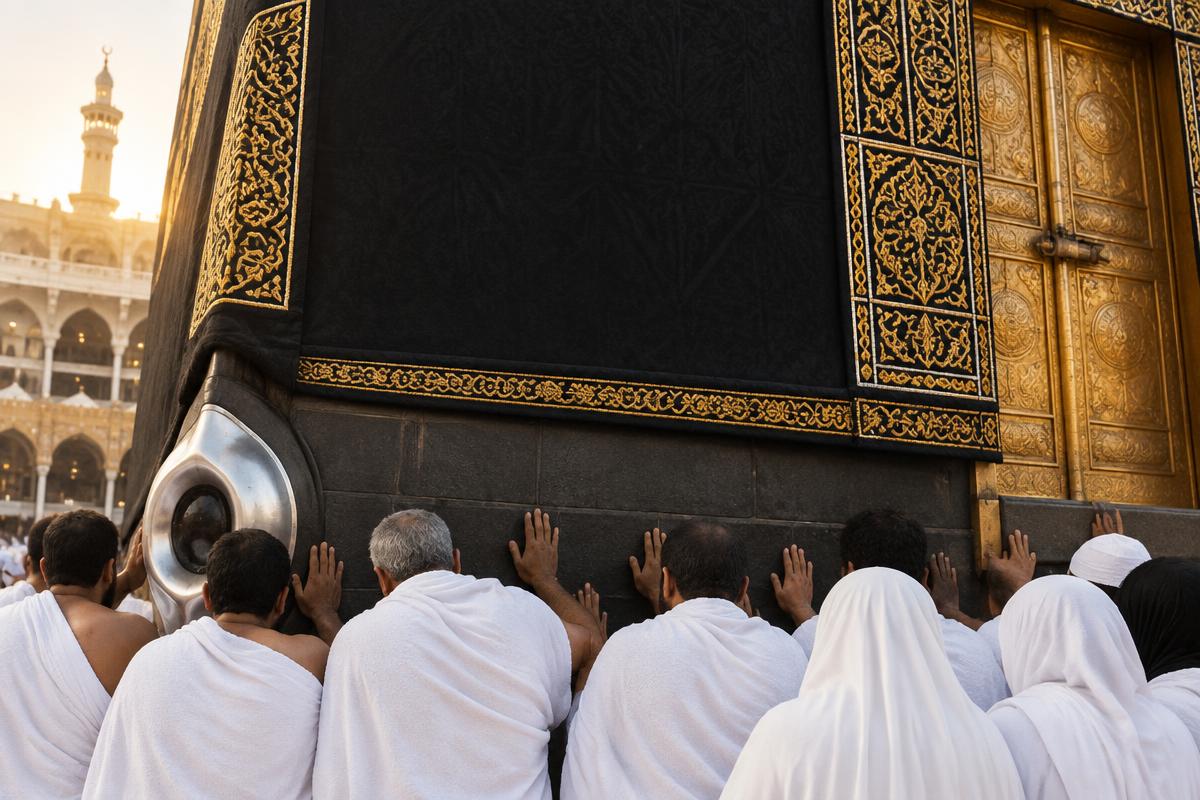
Al-Multazam — المُلْتَزَم
The space between the Black Stone corner and the door of the Ka'bah (about 2 m). If it is reachable, you may press your chest, face and forearms against it and make du'a.
Walking to Maqam Ibrahim after the 7th circuit
وَاتَّخِذُوا مِنْ مَقَامِ إِبْرَاهِيمَ مُصَلًّى
Wattakhidhu min maqami Ibrahima musalla
“And take the standing place of Ibrahim as a place of prayer.” (Qur'an 2:125) Cover your right shoulder, keep the Maqam between you and the Ka'bah, and pray two rak'ahs — anywhere in the mosque if it's too crowded.
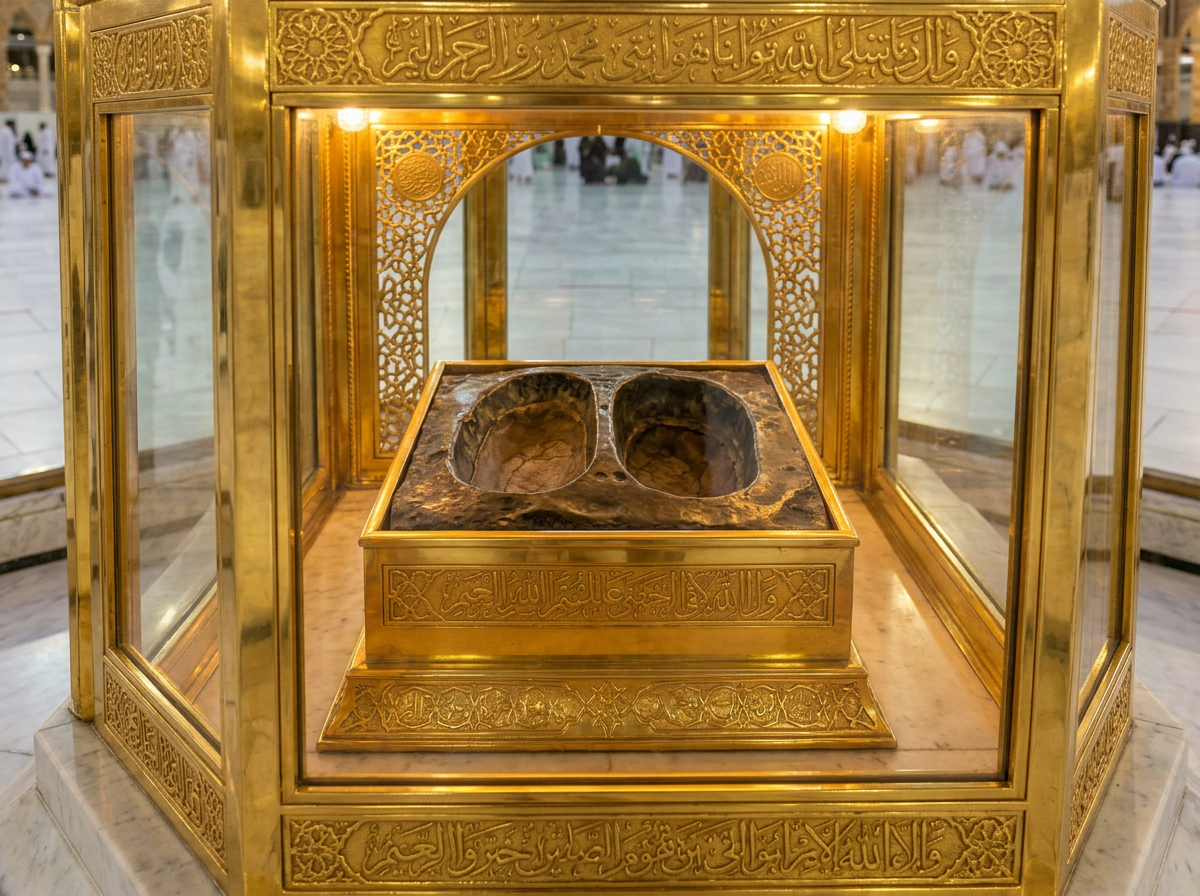
Zamzam — زَمْزَم
- After the two rak'ahs, drink Zamzam and pour some over your head.
- Zamzam coolers (cold and room temperature) are all over the mosque.
- Then, if you can, return to the Black Stone, say takbir and touch it before heading to Safa.
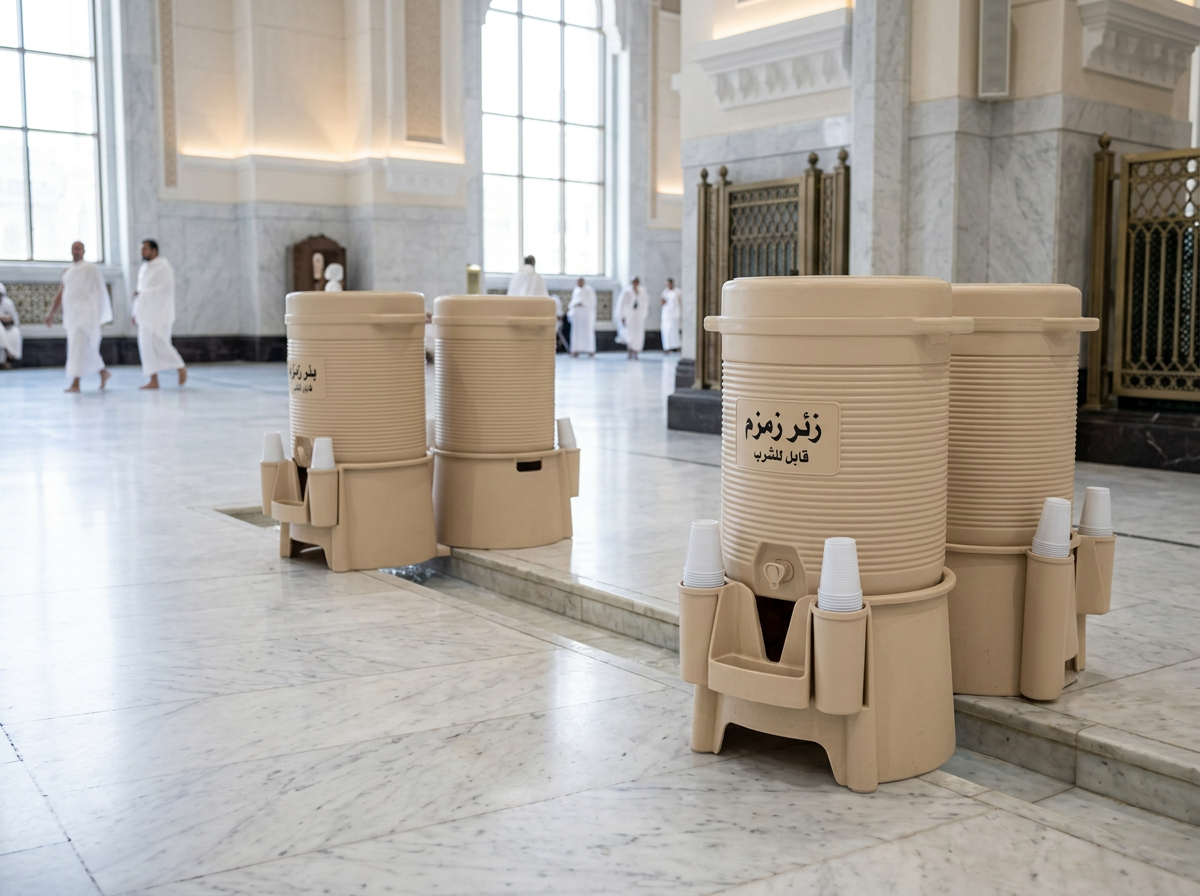
Virtue of Zamzam
مَاءُ زَمْزَمَ لِمَا شُرِبَ لَهُ — إِنَّهَا طَعَامُ طُعْمٍ وَشِفَاءُ سُقْمٍ
“Zamzam water is for whatever it is drunk for.” (Ahmad & Ibn Majah) “It is a food that nourishes and a cure for illness.” (Muslim)
Du'a of Ibn 'Abbas when drinking
اللَّهُمَّ إِنِّي أَسْأَلُكَ عِلْمًا نَافِعًا، وَرِزْقًا وَاسِعًا، وَشِفَاءً مِنْ كُلِّ دَاء
Allahumma inni as'aluka 'ilman nafi'a, wa rizqan wasi'a, wa shifa'an min kulli da'
O Allah, I ask You for beneficial knowledge, plentiful provision and a cure from every illness.
Step 4
Sa'i between Safa and Marwah — السَّعْي
Seven laps beginning at Safa and finishing at Marwah.
Sa'i laps
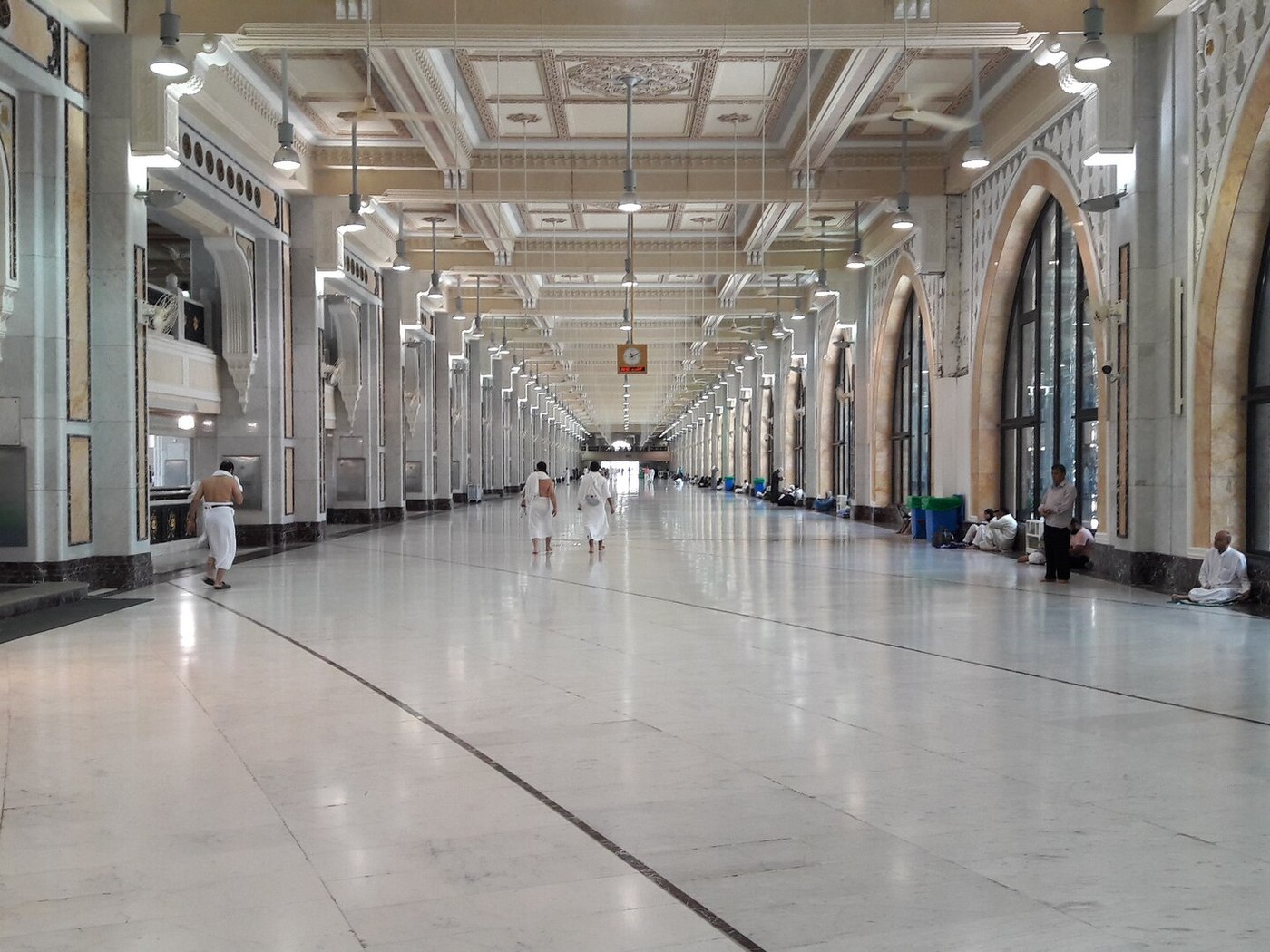
Safa to Marwah is lap 1; Marwah to Safa is lap 2.
Approaching Mount Safa — جَبَل الصَّفَا
إِنَّ الصَّفَا وَالمَرْوَةَ مِن شَعَائِرِ اللهِ
Innas-Safa wal-Marwata min sha'a'irillah
Indeed, as-Safa and al-Marwah are among the symbols of Allah. Recited once, as you walk towards Safa.
Supplication atop Safa and Marwah
- Face the Ka'bah, raise your hands and say Allahu Akbar three times.
- Recite the formula below, repeating it three times with personal du'a in between.
- Avoid coordinated group chanting — supplicate individually.
لَا إِلَهَ إِلَّا اللهُ وَحْدَهُ لَا شَرِيكَ لَهُ، لَهُ المُلْكُ وَلَهُ الحَمْدُ وَهُوَ عَلَى كُلِّ شَيْءٍ قَدِيرٌ، لَا إِلَهَ إِلَّا اللهُ وَحْدَهُ، أَنْجَزَ وَعْدَهُ، وَنَصَرَ عَبْدَهُ، وَهَزَمَ الأَحْزَابَ وَحْدَهُ
La ilaha illallah wahdahu la shareeka lah, lahul-mulk wa lahul-hamd, wa huwa 'ala kulli shay'in qadeer. La ilaha illallahu wahdah, anjaza wa'dah, wa nasara 'abdah, wa hazamal-ahzaba wahdah
There is no god but Allah alone, without partner. To Him belongs the dominion and all praise, and He has power over all things. There is no god but Allah alone; He fulfilled His promise, aided His servant, and defeated the confederates alone.
| Lap | From | To | Notes |
|---|---|---|---|
| 1 | Safa (الصَّفَا) | Marwah (المَرْوَة) | Face the qiblah and make du'a at Marwah |
| 2 | Marwah (المَرْوَة) | Safa (الصَّفَا) | Repeat the du'a atop Safa |
| 3 | Safa (الصَّفَا) | Marwah (المَرْوَة) | |
| 4 | Marwah (المَرْوَة) | Safa (الصَّفَا) | |
| 5 | Safa (الصَّفَا) | Marwah (المَرْوَة) | |
| 6 | Marwah (المَرْوَة) | Safa (الصَّفَا) | |
| 7 | Safa (الصَّفَا) | Marwah (المَرْوَة) | Umrah acts end here at Marwah |
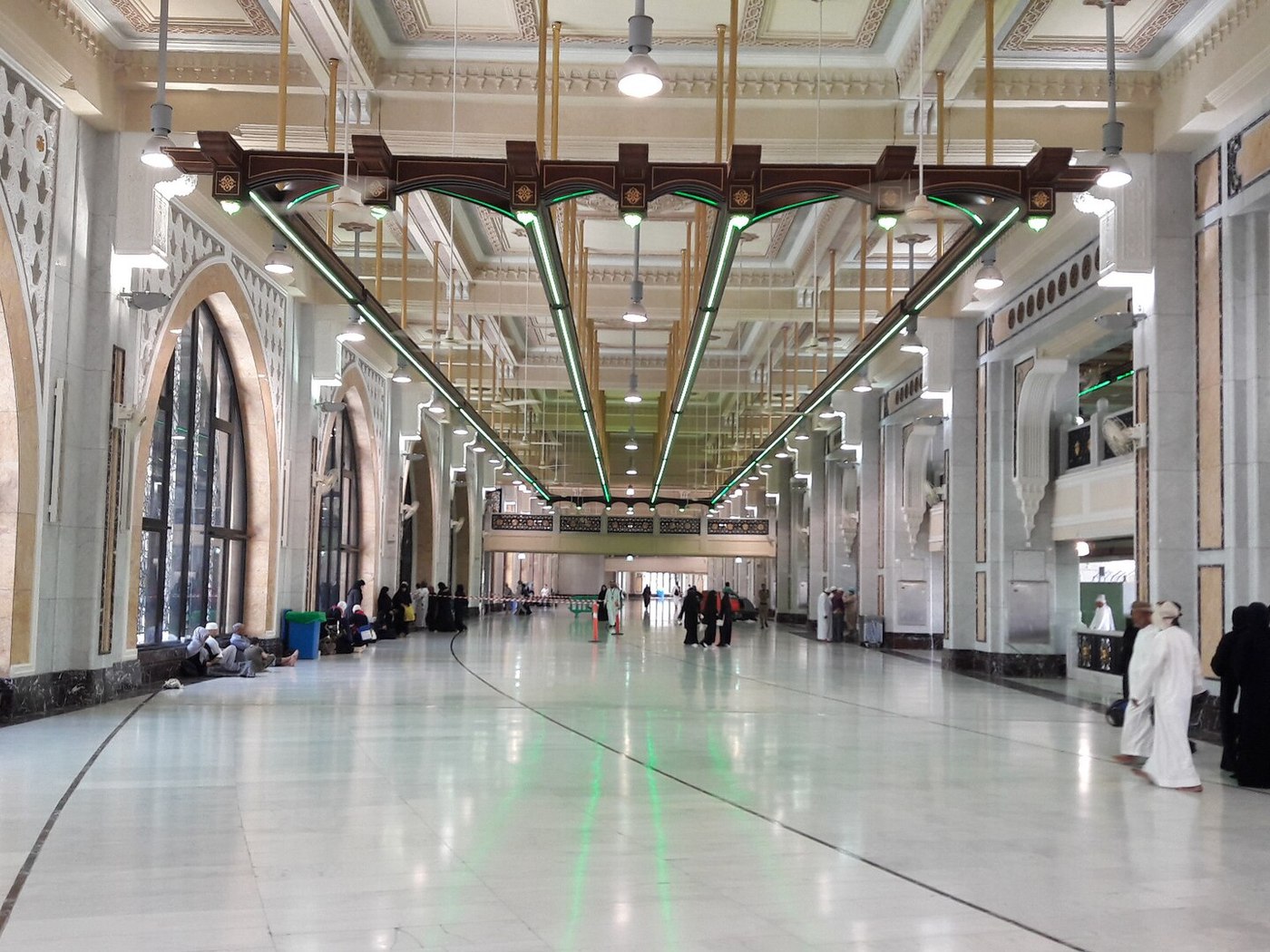
The green light zone
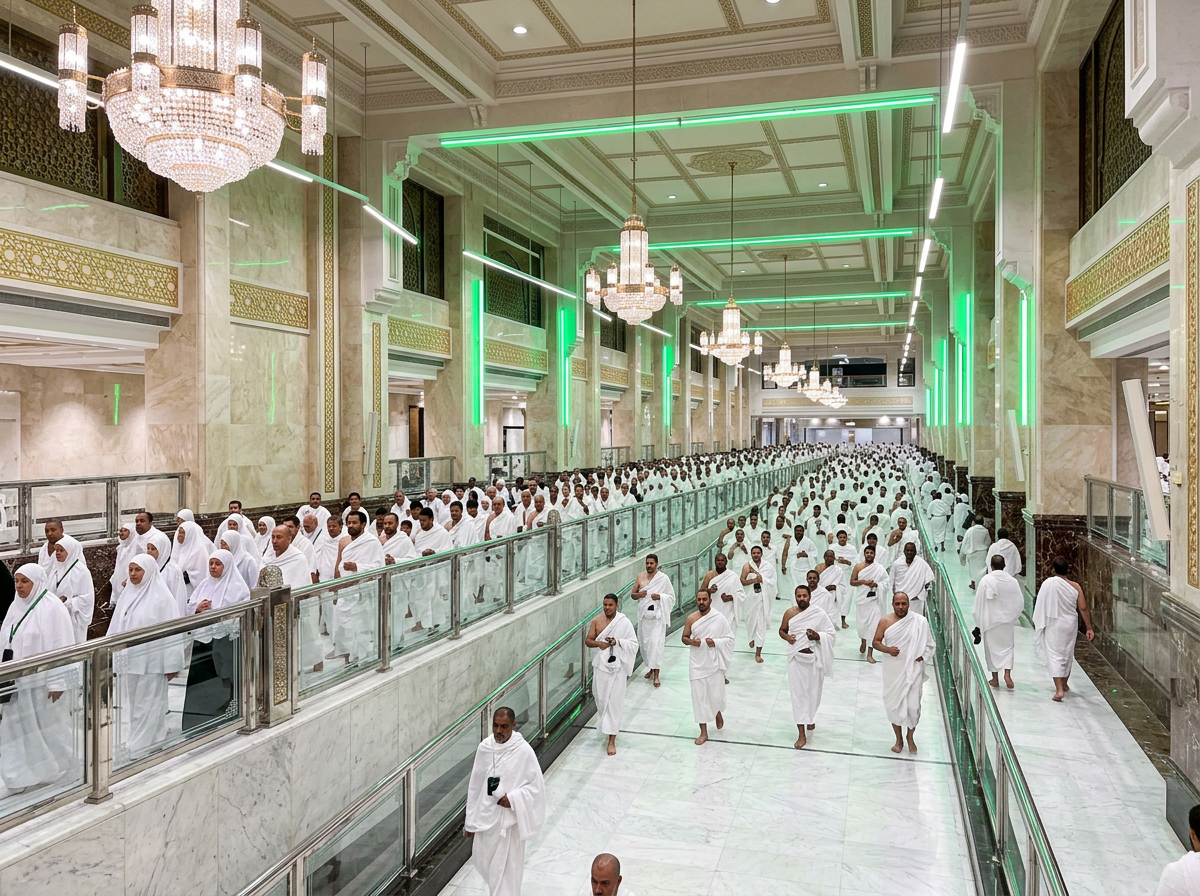
Between the two sets of fluorescent green lights, men run or quicken their pace. Women keep their normal walking stride.
Mobility
Designated wheelchair pathways run along the upper and central decks; push services can be hired for around 100 SAR.
Full ayah at the foot of Safa (once only)
إِنَّ الصَّفَا وَالْمَرْوَةَ مِن شَعَائِرِ اللَّهِ ۖ فَمَنْ حَجَّ الْبَيْتَ أَوِ اعْتَمَرَ فَلَا جُنَاحَ عَلَيْهِ أَن يَطَّوَّفَ بِهِمَا ۚ وَمَن تَطَوَّعَ خَيْرًا فَإِنَّ اللَّهَ شَاكِرٌ عَلِيمٌ
Innas-safa wal-marwata min sha'a'irillah, faman hajjal-bayta awi'tamara fala junaha 'alayhi an yattawwafa bihima, wa man tatawwa'a khayran fa-innallaha shakirun 'aleem
“Indeed, Safa and Marwah are among the symbols of Allah. So whoever makes Hajj or Umrah, there is no sin on him in going between them. And whoever does good voluntarily — Allah is Appreciative and All-Knowing.” (Qur'an 2:158)
Then say
نَبْدَأُ بِمَا بَدَأَ اللهُ بِه
Nabda'u bima bada'allahu bih
We begin with what Allah began with (Safa) — as the Prophet ﷺ said. Climb Safa until you can see the Ka'bah, or simply face it.
You may say during Sa'y
رَبِّ اغْفِرْ وَارْحَمْ، إِنَّكَ أَنْتَ الأَعَزُّ الأَكْرَم
Rabbighfir warham, innaka antal-a'azzul-akram
My Lord, forgive and have mercy; You are the Most Mighty, the Most Generous. (Reported from Ibn Mas'ud and Ibn 'Umar.)
Step by step
- On Safa: face the Ka'bah, say «الله أكبر» three times and the dhikr above — three times, with your own du'a in between.
- Walk towards Marwah. Between the green lights, men jog at a medium pace; then walk to Marwah and climb it.
- Repeat the same dhikr and du'a on Marwah. That is one lap.
- Return to Safa (jogging between the green lights) — that is the second lap.
- Complete seven laps, finishing on Marwah.
Common mistakes in Sa'y
Raising the hands on Safa and Marwah as in prayer.
Raise them as in du'a, facing the qiblah.
Jogging the whole way.
Jog only between the two green markers.
Reciting ayah 2:158 at the start of every lap.
Recite it once, at the foot of Safa at the very beginning.
Counting Safa → Marwah → Safa as one lap.
That is two laps.
Reading a set du'a for each lap from a booklet.
There is no such thing in the Sunnah.
Step 5
Exiting ihram — التَّحَلُّل: الحَلْق أَو التَّقْصِير
The final rite. Once the hair is cut, all restrictions of ihram are lifted.
For men — الرِّجَال
- Shaving the entire head (halq — حَلْق) is far more virtuous — the Prophet ﷺ prayed for Allah's mercy three times for those who shave completely.
- Or trim the hair evenly all over (taqsir — تَقْصِير).
- Certified barbershops sit directly outside the Marwah exit, near the Clock Tower concourse.
For women — النِّسَاء
- Trim only a fingertip's length (anmalah — أَنْمَلَة) from the ends of the gathered hair.
- Never expose the hair in public courtyards or use street vendors outside the Marwah exit.
- Wait until you are back in the privacy of your hotel room to cut your hair.
Completion
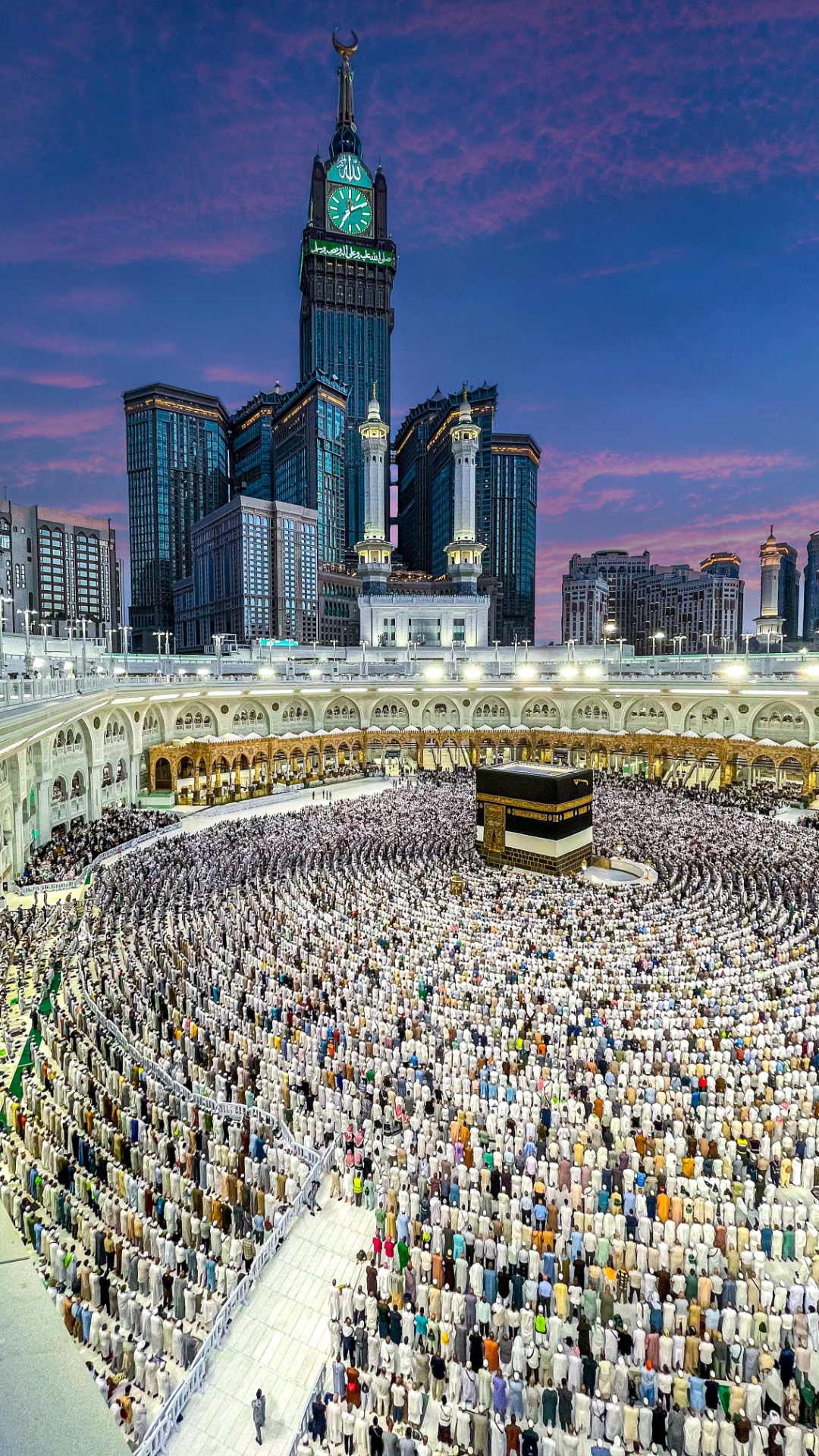
Tahallul (التَّحَلُّل) is complete — all ihram restrictions are lifted and normal clothing and actions are lawful again. May Allah accept it from you.
Getting it right
- Shaving is best, unless there is not enough time for the hair to grow back before Hajj.
- Trimming must be from all over the head — cutting from the sides only is not enough.
- Start with the right side of the head, as the Sunnah is.
- Someone who is bald has nothing to do.
- It is fine for someone still in ihram to cut their own hair or someone else's.
- Everything forbidden by ihram becomes permissible again.
Performing several Umrahs in one trip
Going out to Tan'eem repeatedly for extra Umrahs — sometimes several in a day — has no basis in the practice of the Prophet ﷺ or his Companions, and the tiredness often causes people to miss fard prayers. The exceptions are an Umrah for someone who has died, for someone too ill or old to go themselves, or to fulfil a vow. The best worship after your Umrah is extra tawaf — do as many as you like.
After Umrah
Visiting Madinah al-Munawwarah
The Prophet's ﷺ Masjid, the Rawdah, Quba and al-Baqi'.
The Haram and merits of Madinah
- The Prophet ﷺ declared Madinah sacred as Ibrahim declared Makkah: “What lies between its two lava plains is sacred.”
- It is the land of the Hijrah and of revelation, and the home of faith, to which faith will return at the end of time.
- Angels guard its entrances — neither the Dajjal nor plague will enter it.
- He ﷺ prayed: “O Allah, make Madinah as dear to us as Makkah, or more,” and asked for double the blessing given to Makkah.
Masjids to visit
- The only two masjids in Madinah to travel to for prayer are Masjid an-Nabawi and Masjid Quba (the first masjid in Islam).
- Other sites may be visited for their history.
- Visiting the Prophet's ﷺ masjid or grave is not a condition of Hajj or Umrah. Beware of fabricated hadiths about it.
- Masjid Quba is 3.75 km (2.3 miles) south. The Prophet ﷺ went there on Saturdays; praying two rak'ahs there is like an Umrah.
- A prayer in Masjid an-Nabawi — including its expansions — is better than 1,000 elsewhere.
The Rawdah — الرَّوْضَة الشَّرِيفَة
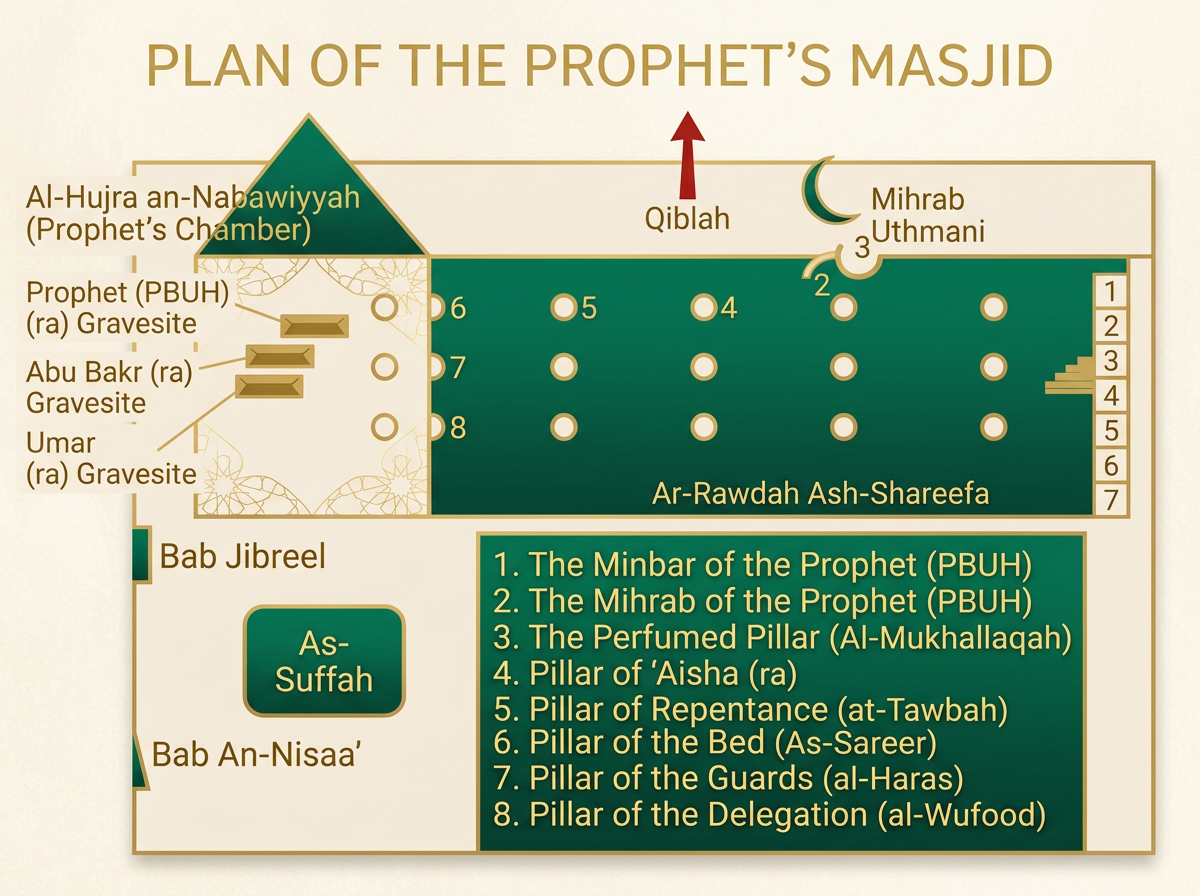
مَا بَيْنَ بَيْتِي وَمِنْبَرِي رَوْضَةٌ مِنْ رِيَاضِ الجَنَّةِ، وَمِنْبَرِي عَلَى حَوْضِي
“Between my house and my pulpit is a garden from the gardens of Paradise, and my pulpit is at my Fountain.” The Rawdah is always busy — book your slot on the Nusuk app.
Sahih al-Bukhari
Greeting the Prophet ﷺ
- Enter like any masjid: right foot first, the entry du'a, then two rak'ahs of tahiyyat al-masjid.
- Walk calmly and say salam to the Prophet ﷺ at the large opening in the middle of the brass screen.
- Move to the next opening and greet Abu Bakr as-Siddiq (رضي الله عنه), then the next and greet 'Umar ibn al-Khattab (رضي الله عنه).
- Don't keep repeating the visit unless you have come back from a journey — you can send salam from anywhere.
لَا تَجْعَلُوا بُيُوتَكُمْ قُبُورًا، وَلَا تَجْعَلُوا قَبْرِي عِيدًا، وَصَلُّوا عَلَيَّ فَإِنَّ صَلَاتَكُمْ تَبْلُغُنِي حَيْثُ كُنْتُمْ
“Do not turn your homes into graves, and do not make my grave a place of festival. Send blessings on me, for they reach me wherever you are.”
Ahmad & Abu Dawud
Visiting al-Baqi' — البَقِيع
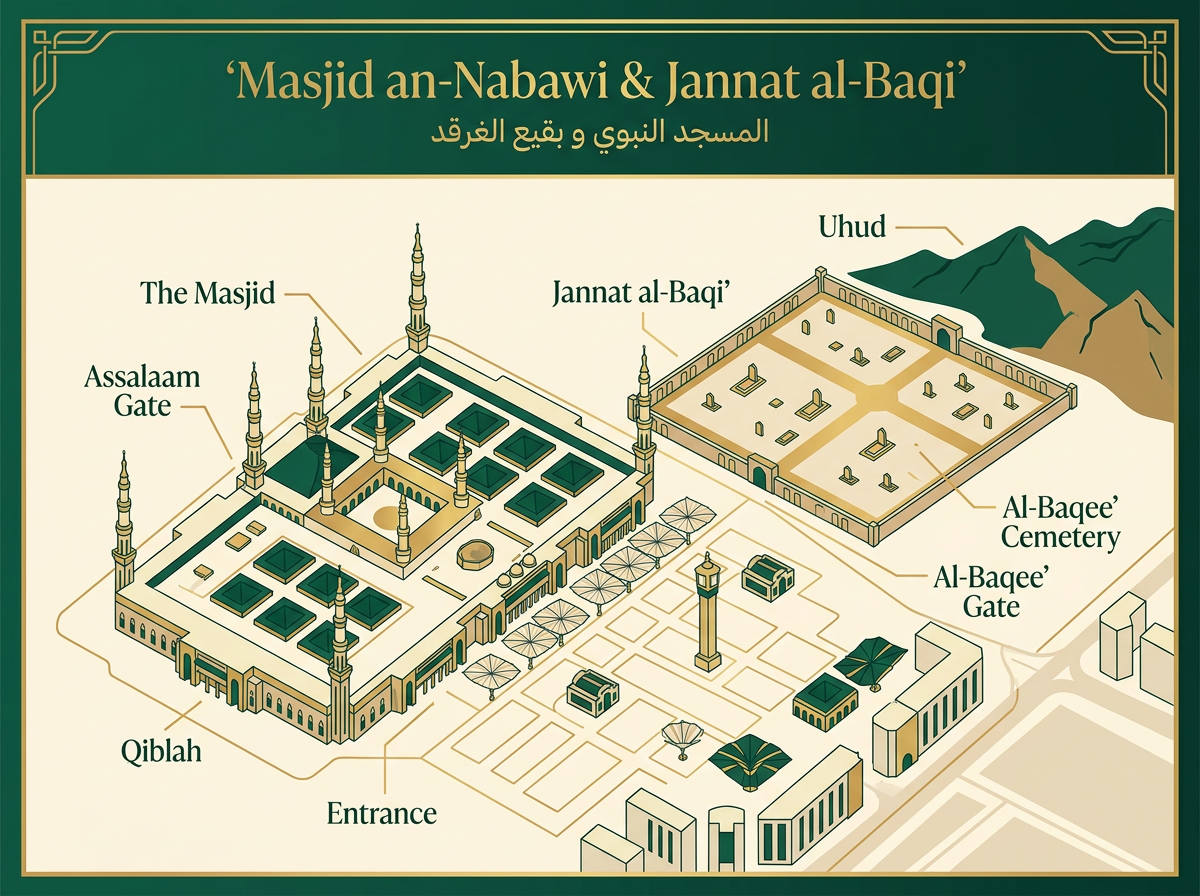
السَّلَامُ عَلَيْكُمْ أَهْلَ الدِّيَارِ مِنَ المُؤْمِنِينَ وَالمُسْلِمِينَ، وَإِنَّا إِنْ شَاءَ اللهُ بِكُمْ لَاحِقُونَ، نَسْأَلُ اللهَ لَنَا وَلَكُمُ العَافِيَة
Assalamu 'alaykum ahlad-diyari minal-mu'mineena wal-muslimeen, wa inna in sha'allahu bikum lahiqun, nas'alullaha lana wa lakumul-'afiyah
Peace be upon you, believing and Muslim people of these dwellings. We will join you, if Allah wills. We ask Allah for well-being for us and for you. Most of the Companions and the Prophet's ﷺ wives are buried here.
Sahih Muslim
Step 6
Quick checklist
Tick each rite off as you complete it — your progress stays on this device.
Your Umrah checklist
0 of 7 complete
Your ticks are saved on this device.
Ready to plan your journey?
Hotels close to the Haram, flights, visa and transfers arranged in one clear price.