Ziyarah

Places to Visit in Makkah and Madinah

Discover the mountains, mosques, wells and battlefields that shaped the seerah. Site information and photography are drawn from the official Nusuk Makkah and Madinah locations guide.

Makkah

Makkah is the spiritual heart of over 1.8 billion Muslims, and its history is intertwined with the very foundations of Islam. At its centre lies Masjid al-Haram, the largest mosque in the world, surrounding the Kaaba — the Qibla towards which Muslims turn in every prayer.

Beyond its religious significance, Makkah is a vibrant city with a rich cultural heritage. Its bustling markets, historic sites and modern developments reflect a unique blend of ancient tradition and contemporary life.

Whether you are performing Umrah or simply visiting to experience its sanctity, the valleys, mountains and mosques around the city bring the seerah to life.

20 sites to explore

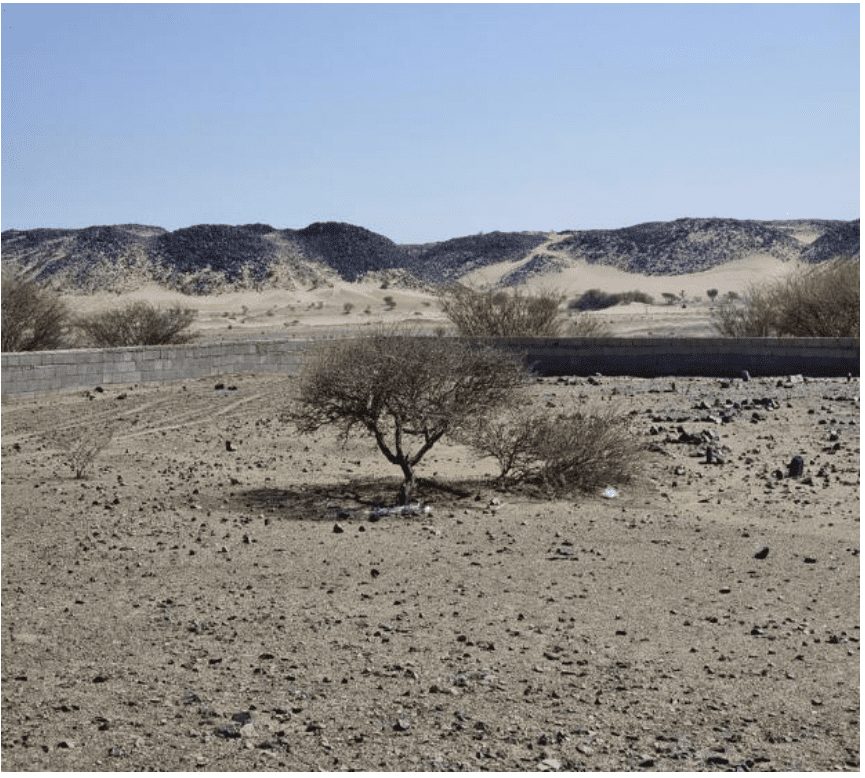
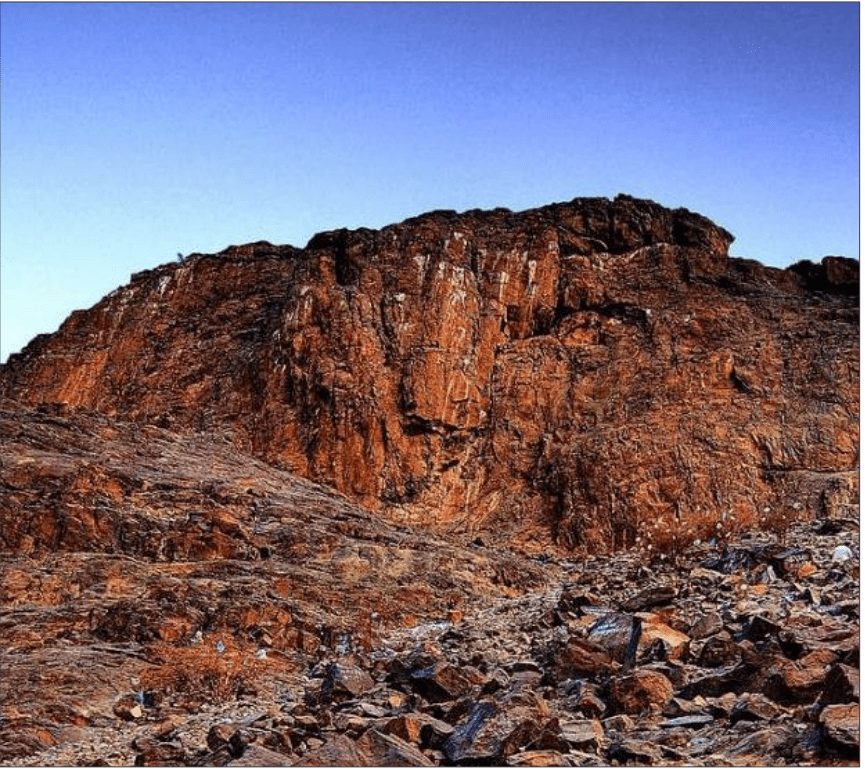
Jabal al-Nour (Mount of Light) and Cave of Hira

Jabal al-Nour (Mount of Light) and Cave of Hira

One of the most famous mountains in Makkah, located to the east of the Holy Mosque, this mountain includes the Cave of Hira, where the Prophet used to worship before the Prophethood. It is the place where the first verses of the Quran were revealed, with the words: 'Read in the name of your Lord who created' [Surah Al-Alaq: 1]. It is one of the high mountains in Makkah, with its peak resembling the hump of a camel. There is no mountain in Makkah that resembles Jabal al-Nour; it is unique in shape and appearance among the mountains.

View on the map
Jabal Thawr - Thawr Mountain

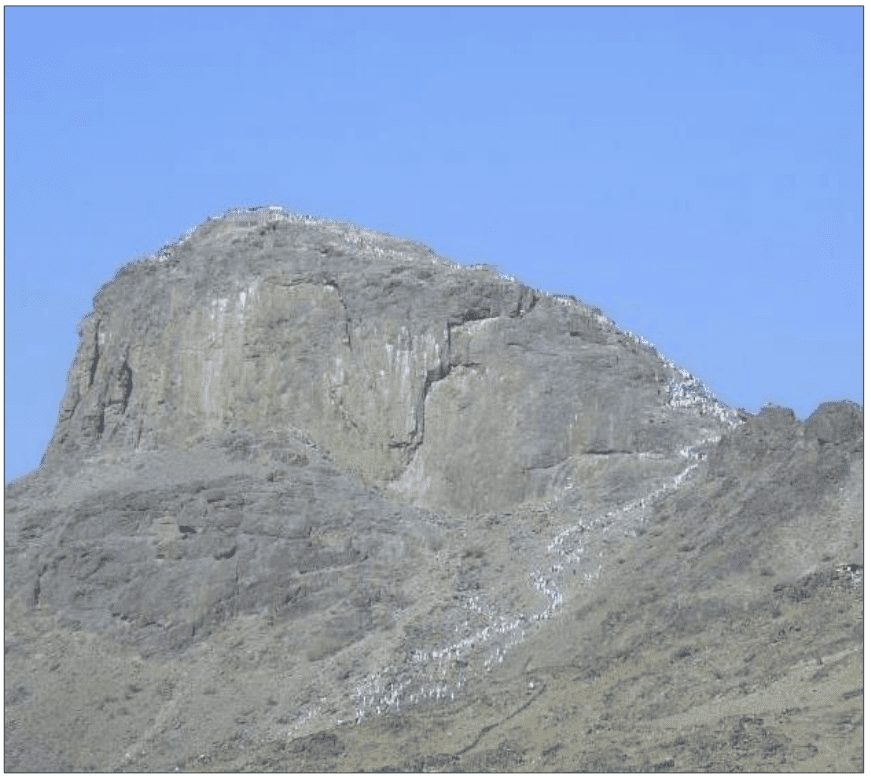
Jabal Thawr - Thawr Mountain

One of the most famous mountains in Makkah, located to the south of the Grand Mosque, is Jabal Thawr. The Prophet Muhammad (peace be upon him) and his companion Abu Bakr al-Siddiq took refuge in the Cave of Thawr on Jabal Thawr for three nights during their migration to Madinah. The disbelievers of Quraysh followed their trail to the entrance of the cave but were unable to find them. In this context, Allah says: "If you do not aid him (the Prophet), Allah has already aided him when those who disbelieved drove him out as one of two when they were in the cave. When he said to his companion, 'Do not grieve; indeed Allah is with us.'" (Surah At-Tawbah: 40).

View on the map
Al-Hudaybiya Site

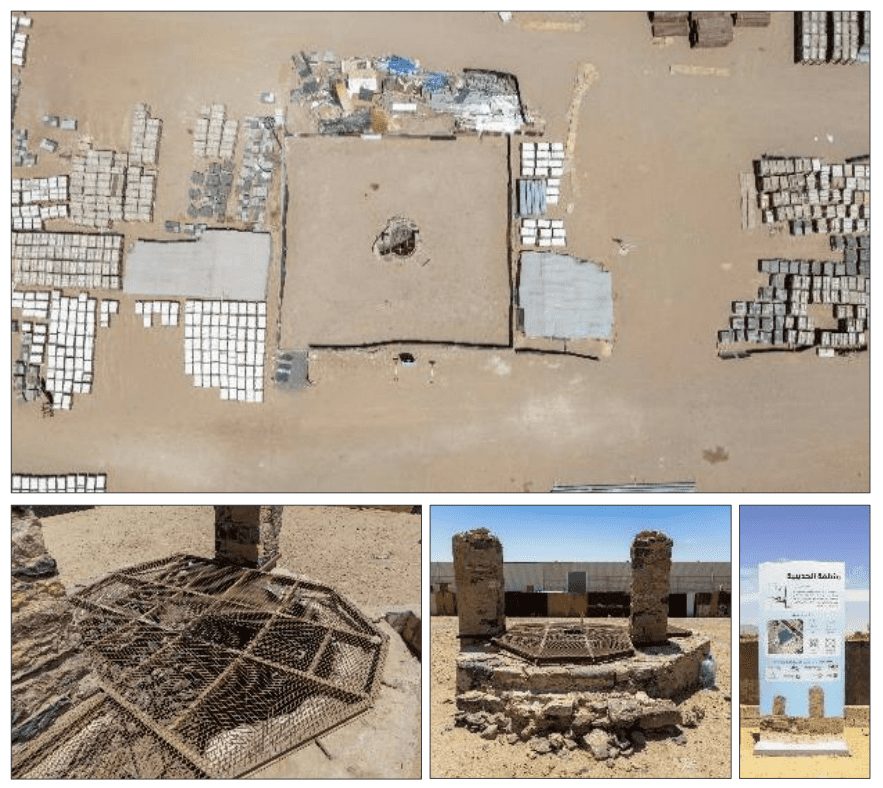
Al-Hudaybiya Site

It is located to the west of the Grand Mosque on the old road between Makkah and Jeddah. It is a well near the tree where the Prophet Muhammad (peace be upon him) pledged allegiance to the Muslims in the Pledge of Ridwan. The Treaty of Hudaybiyyah, known for its agreement between the Prophet and the disbelievers of Quraysh, was concluded there in the year 6 AH (627 CE). Allah revealed Surah Al-Fath (The Victory) after the Treaty of Hudaybiyyah. The virtue of those who attended the treaty is mentioned in the narration by Jabir ibn Abdullah (may Allah be pleased with him): "On the day of Hudaybiyyah, we were 1,400 in number. The Prophet Muhammad (peace be upon him) said to us, 'You are the best people on earth today.' Allah praised them in the Qur'an: 'Indeed, those who pledge allegiance to you, [O Muhammad], they are pledging allegiance to Allah. The hand of Allah is above their hands. So whoever breaks his pledge, only breaks it to the detriment of himself. And whoever fulfills what he has promised Allah - He will give him a great reward' (Surah Al-Fath: 10). Today, Hudaybiyyah is a prosperous town known as Ash-Shumaysi.

View on the map
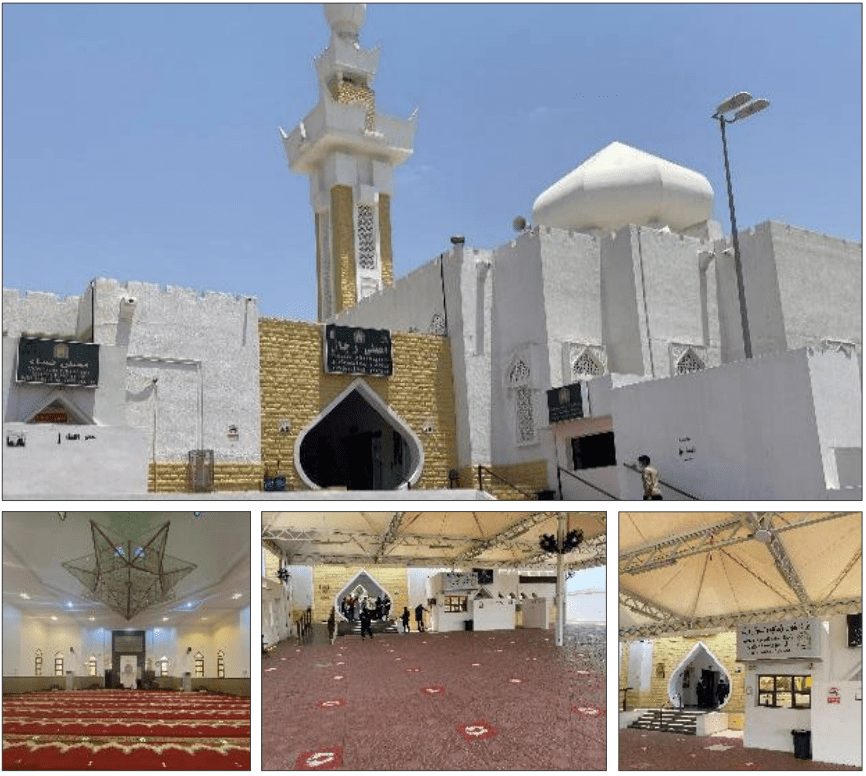
The Bay'ah Mosque in Mina

The Bay'ah Mosque in Mina

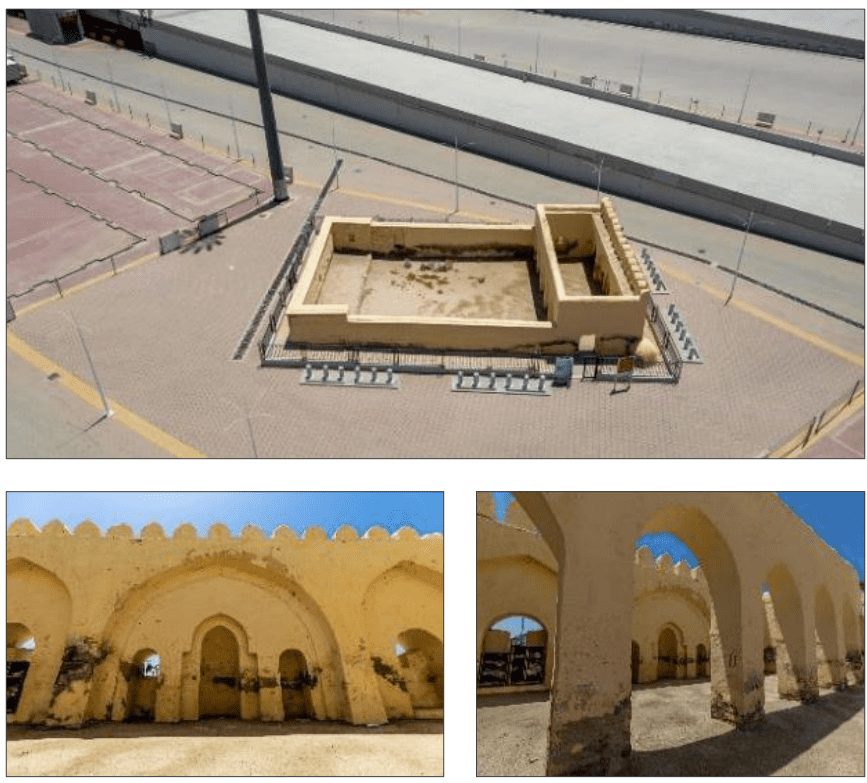
It is located at the base of Mount Thubayr overlooking the Jamrat areas in Mina, at the site of the Pledge of Aqabah, where the Ansar pledged allegiance to the Prophet Muhammad (peace be upon him) in the presence of his uncle, Abbas ibn Abdul Muttalib. This pledge led to the migration of the Prophet to Madinah. Caliph Abu Ja'far al-Mansur built a mosque at the site of the pledge in the year 144 AH / 761 CE. The mosque was renovated and maintained during the Saudi era, with the latest restoration being part of Prince Mohammed bin Salman's project to develop historical mosques.

View on the map
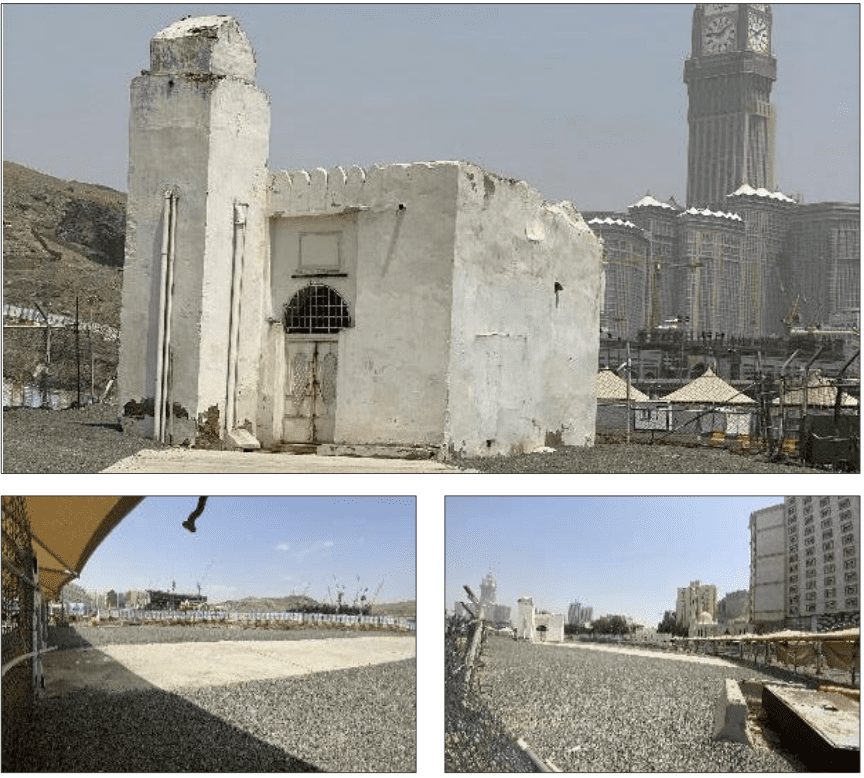
Masjid al-Jinn - Mosque of the Jinn

Masjid al-Jinn - Mosque of the Jinn

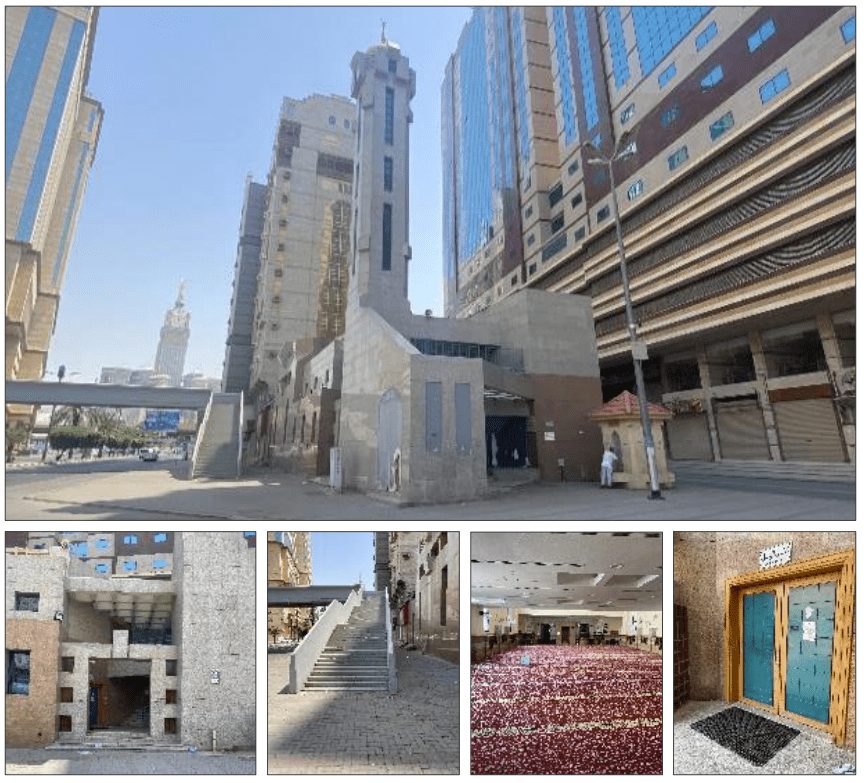
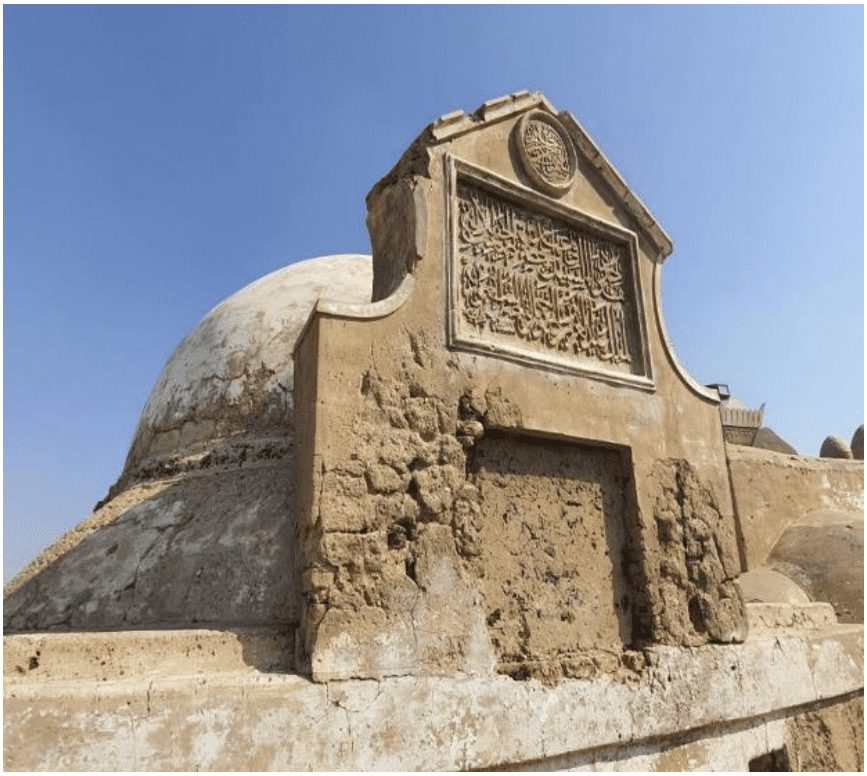
It is one of the significant historical mosques in Makkah, located near the Sacred Mosque. It was built in the early 3rd century AH (9th century CE). It is named after the place where the Prophet Muhammad (peace be upon him) met the jinn at night, and where Surah Al-Jinn was revealed. Allah Almighty says: "Say, ‘It has been revealed to me that a group of jinn listened [to the Quran] and said, ‘Indeed, we have heard a wondrous recitation’" (Surah Al-Jinn, 72:1). It is also known as the Mosque of the Guard because it was the last point on the northeastern side of the Haram where the guards maintaining security in Makkah would meet and gather. It is also called the Mosque of the Pledge because the jinn pledged allegiance to the Prophet at this location. King Abdulaziz Al Saud took special care and interest in this mosque, and its construction has been recently renovated.

View on the map
Masjid Al-Taneem - Masjid Aishah

Masjid Al-Taneem - Masjid Aishah

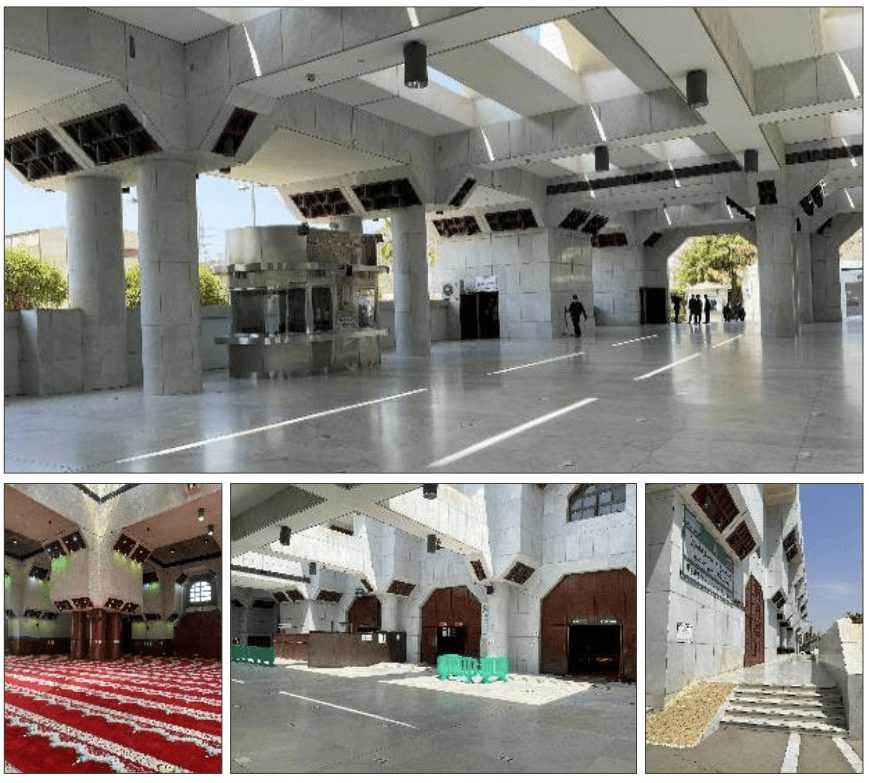
Located west of Makkah, it is one of the places from which residents of Makkah and others enter into Ihram for Umrah. The place gained its fame because Aisha bint Abu Bakr (may Allah be pleased with her) entered into Ihram for Umrah from there, after the Farewell Pilgrimage. Therefore, it is named the Mosque of Aisha (may Allah be pleased with her). Aisha (may Allah be pleased with her) said: "O Messenger of Allah, your companions return with the reward of Hajj and Umrah, but I did not perform more than Hajj." He replied: "Go, and let Abdur Rahman accompany you." So, Abdur Rahman was instructed to perform Umrah with her from Tan'im, and the Messenger of Allah (peace be upon him) waited for her at the top of Makkah until she arrived. This site is one of the closest places for exiting Ihram from the Haram. The mosque was built in 240 AH (854 CE) and has been renovated many times, with the most recent renovation occurring during the reign of King Fahd bin Abdulaziz Al Saud.

View on the map
Masjid al-Namirah - Al-Namirah Mosque

Masjid al-Namirah - Al-Namirah Mosque

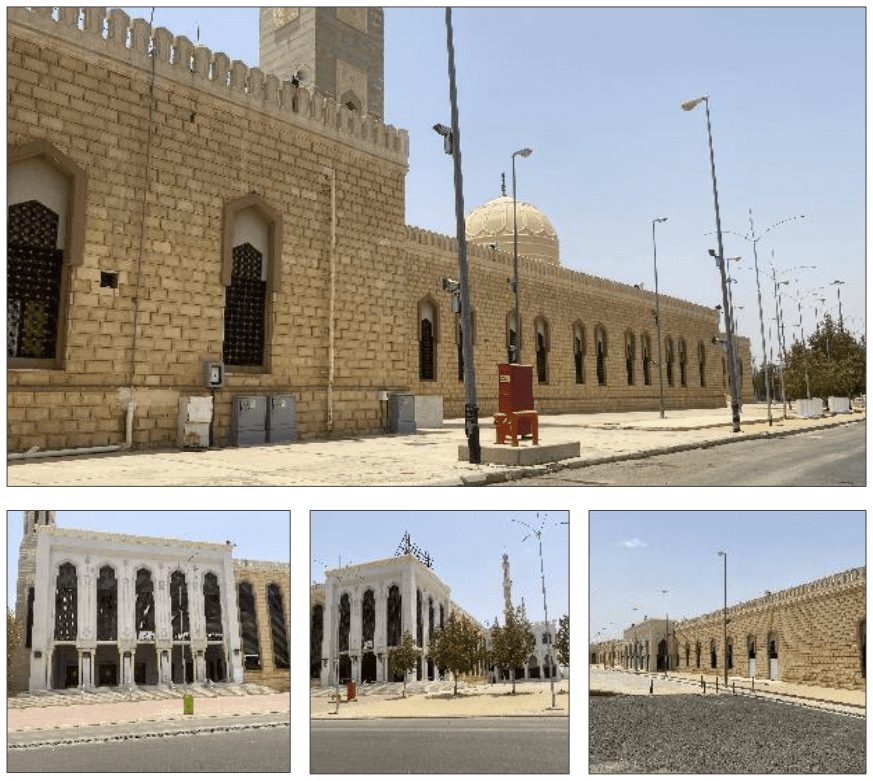
Namirah is the name of a small mountain located to the west of the mosque, to which it is attributed. Pilgrims pray the midday (Dhuhr) and afternoon (Asr) prayers combined and advanced at this site, following the example of the Prophet who moved from Mina to Arafat to stay in a tent at Namirah on the Day of Arafat, the 9th of Dhul-Hijjah. After the sun passed its zenith, he moved to the valley of Uranah where he delivered a sermon and prayed with the people. The Namirah Mosque has undergone several expansions throughout history, with the most recent being during the Saudi era to accommodate the increasing number of pilgrims, making it one of the largest mosques in the world.

View on the map
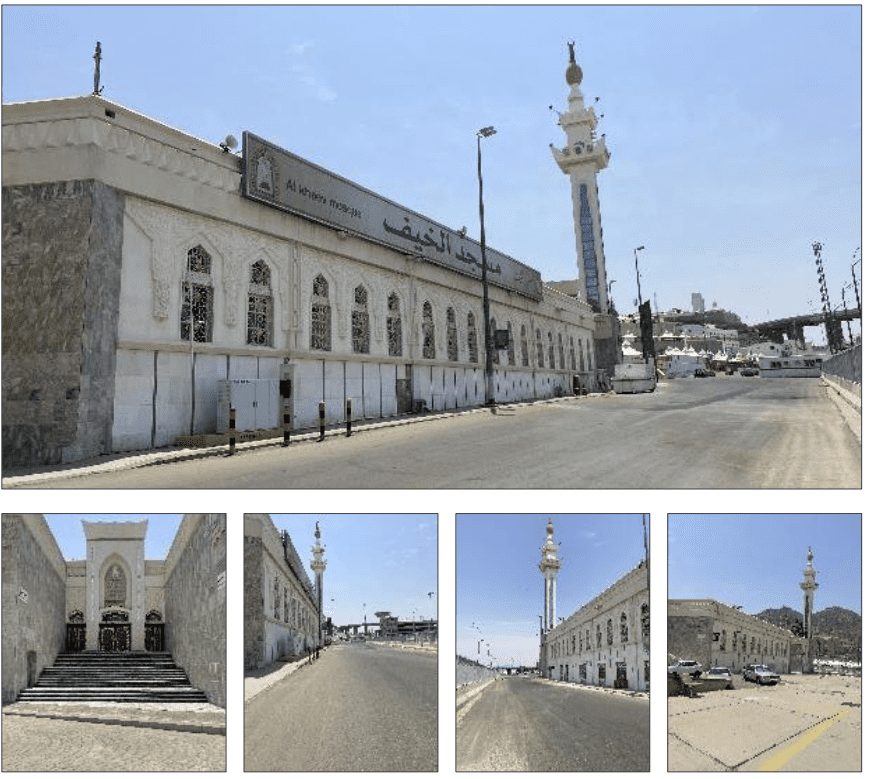
Masjid al-Khayf - Al-Khayf Mosque

Masjid al-Khayf - Al-Khayf Mosque

Located in the Mina area, near the small Jamarah, this mosque is named after the "Khayf of Banu Kinana." The Prophet Muhammad (peace be upon him) stayed at this location during the Farewell Pilgrimage. It is also referred to as the Mina Mosque due to its location within the Mina area. The mosque was expanded and renovated during the reign of King Fahd bin Abdulaziz Al Saud in 1407 AH (1987 CE) to accommodate the increasing number of pilgrims each year.

View on the map
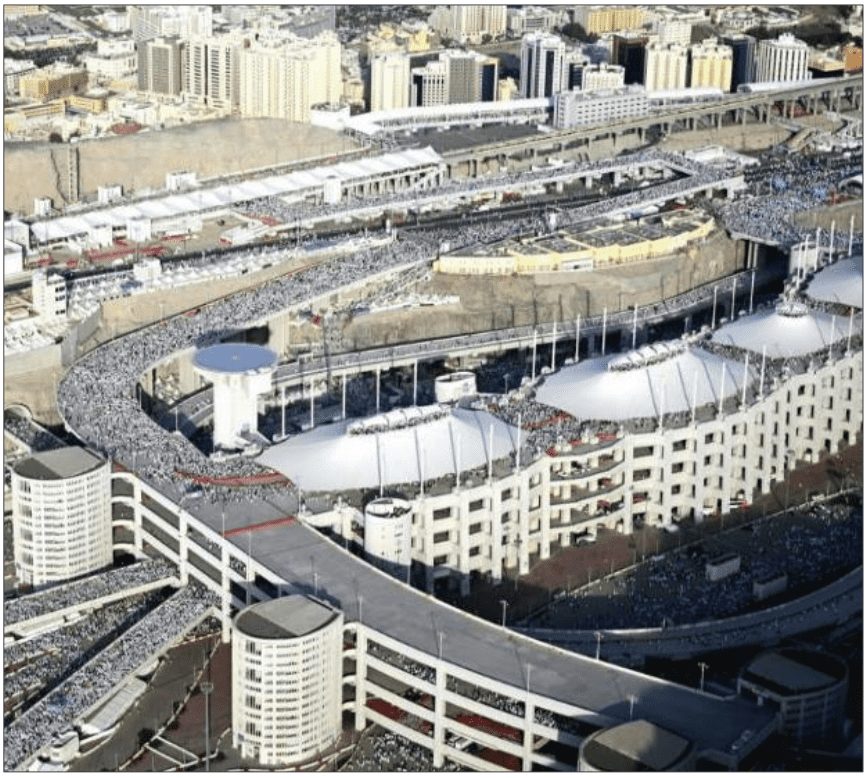
Jamaraat Bridge

Jamaraat Bridge

Located in the Mina area, this bridge was built and developed during the Saudi era to facilitate the process of stoning the Jamarat for pilgrims and to accommodate the increasing number of pilgrims each year. It is situated at the location where Shaitan was said to have tried to tempt the Prophet Ibrahim (peace be upon him) when he intended to sacrifice his son Ismail. It has since become the designated area for pilgrims to perform the stoning ritual at the three Jamarat: the small Jamarah, the middle Jamarah, and the large Jamarah (Jamarat al-Aqabah). Stoning the Jamarat is one of the essential rites of Hajj, involving throwing seven pebbles at each Jamarah. According to a narration from Abdullah bin Omar (may Allah be pleased with him), he would throw seven pebbles at the lower Jamarah, making a Takbir (saying "Allahu Akbar") after each pebble, then move forward and stand facing the Qiblah (the direction of the Kaaba) to pray and raise his hands. He would then throw at the middle Jamarah in the same manner and pray similarly. Finally, he would throw pebbles at the Jamarah al-Aqabah from the valley floor without standing there, saying: "This is how I saw the Prophet Muhammad (peace be upon him) do it."

View on the map
Al-Ji'rana

Al-Ji'rana

Located in the northeast of Makkah, it is home to a mosque built before the third century Hijri / ninth century AD. Pilgrims from Makkah perform Umrah from here. The Prophet Muhammad (peace be upon him) performed Umrah from this location after the Battle of Ta'if. He also stayed here after returning from the Battles of Hunayn and Autas in the eighth year of Hijra (630 AD), where he distributed the spoils of war. Anas ibn Malik (may Allah be pleased with him) was asked: "How many times did the Prophet (peace be upon him) perform Hajj?" He replied: "Once. And he performed Umrah four times: Umrah in Dhul-Qi'dah, Umrah at Hudaybiyyah, Umrah with his Hajj, and Umrah of Ji'ranah, where he distributed the spoils of Hunayn.

View on the map
Tuwa Well

Tuwa Well

Located in the valley of Tuwa in Makkah, Al-Shafi'i said that the valley was named Dhi-Tuwa because of a well there that was covered with stones. It is mentioned that the well was dug by Abd Shams ibn Abd Manaf ibn Qusayy. His daughter, Sabi'a bint Abd Shams, boasted about this well in a poem. The Prophet Muhammad (peace be upon him) stayed by the well of Tuwa in the valley of Tuwa on the night of his arrival during the Umrah of Qada and the Farewell Pilgrimage. He also stopped there on the Day of Conquest to organize his army and direct them to enter Makkah. Abdullah ibn Omar ibn al-Khattab (may Allah be pleased with him) reported: "The Prophet (peace be upon him) would stay at Dhul-Tuwa and spend the night there until he performed the Fajr prayer when he arrived in Makkah. The Prophet's place of prayer was on a thick hill, not in the mosque that was built later, but below that on a rough, thick hill."

View on the map
Asfan Well

Asfan Well

Asfan: A historic and thriving town located 80 kilometers north of Makkah. It has ancient, fresh wells, including the Asfan well, situated in the center of Asfan. It is renowned for its fresh and abundant water, which is comparable to the well of Jaranah in its purity. The town is named Asfan because the valleys run through it. Asfan is 38 kilometers from the Red Sea coast and was a central stop for trade caravans before Islam. It later became a station for trade and pilgrimage caravans on the route between Madinah and Makkah. It is narrated that the Prophet Muhammad (peace be upon him) passed through the valleys of Asfan on his way from Madinah to Makkah in the year 8 AH / 630 CE. Abdullah ibn Abbas reported: "The Prophet (peace be upon him) left Madinah for Makkah, fasted until he reached Asfan, then called for water, raised it with his hands to show the people, and broke his fast until he reached Makkah, during Ramadan." (Reported by Bukhari). It is also narrated that the Prophet (peace be upon him) passed through the valleys of Asfan on his way to Makkah for the Farewell Pilgrimage.

View on the map
Al'Usaylah Inscriptions and Wells

Al'Usaylah Inscriptions and Wells

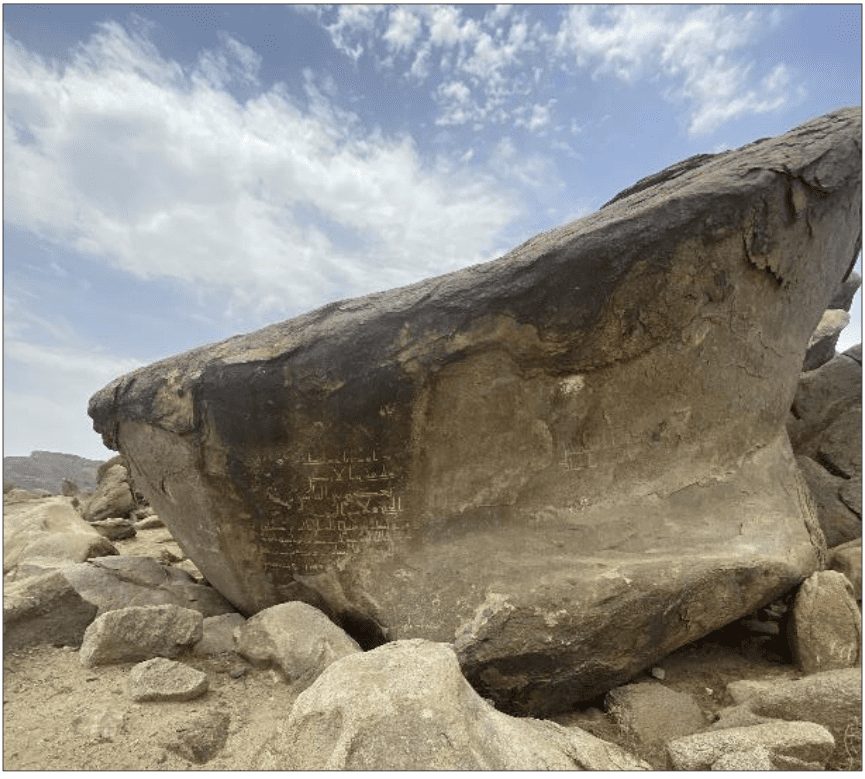
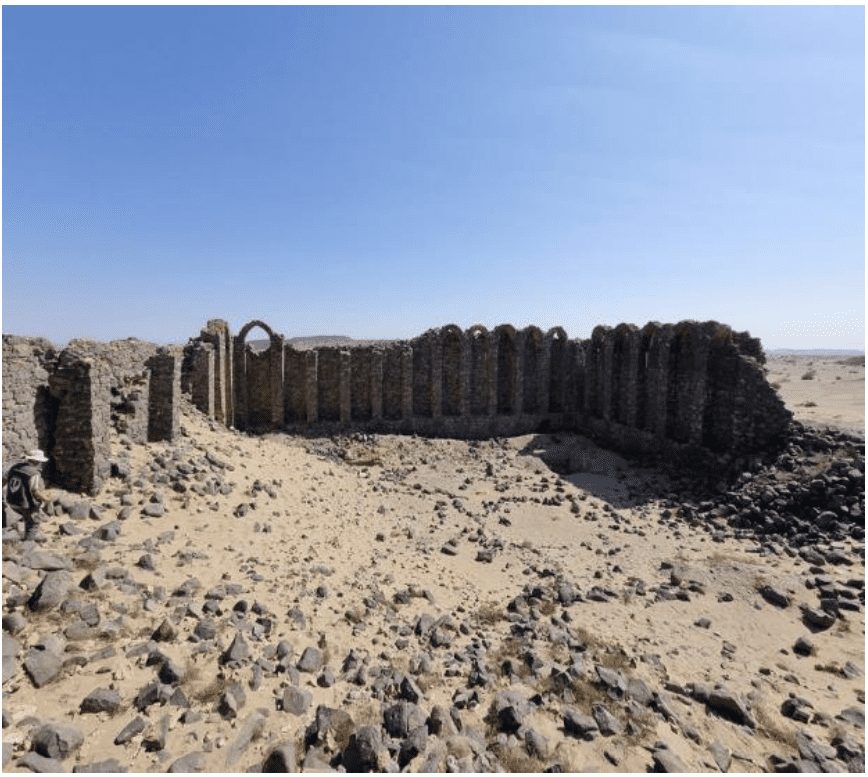
It is located in Wadi Al'Usaylah, northeast of Makkah, in the valley that was on the route of the Hajj caravans coming from the north. It is a fertile valley, historically known as the valley of Khalid ibn Asid. This site contains over sixty inscriptions from the 1st and 2nd Hijri centuries, which correspond to the 7th and 8th centuries CE. These inscriptions are carved into the rock in the mountains known as the Mountains of al-Wajrah. There are two remaining wells out of the original four.

View on the map
Jabal ar-Rahmah - Mount Arafat

Jabal ar-Rahmah - Mount Arafat

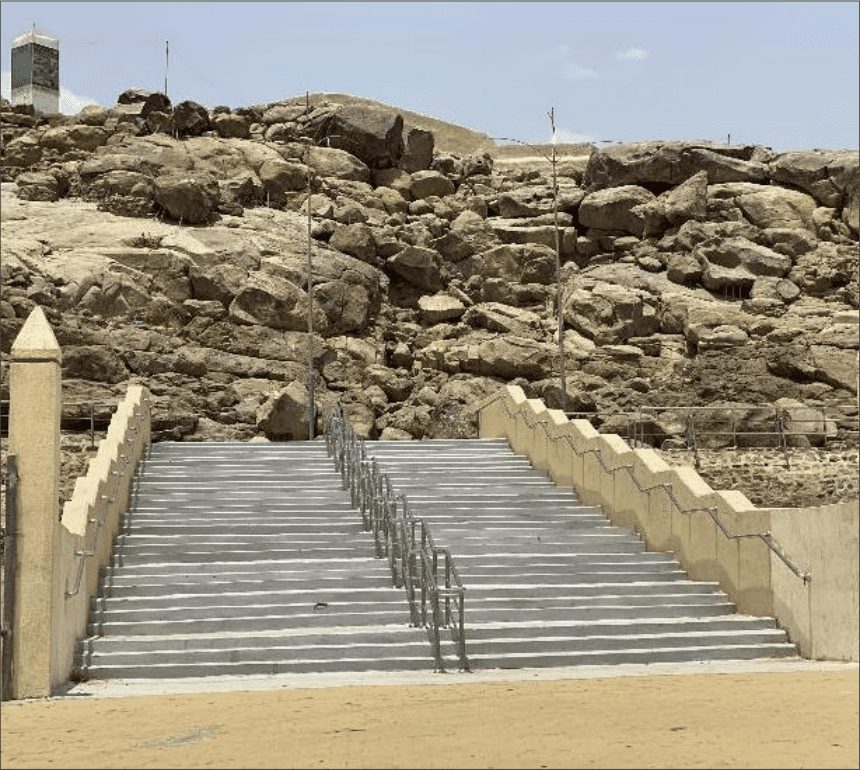
It is also called Jabal Arafat. At its summit, there is a modern marker built to serve as a landmark, standing four meters tall. It is located to the north of the plain of Arafat and outside the boundaries of the sacred area. It is a small mountain, no more than thirty meters high, and difficult to ascend; therefore, steps were constructed to reach the top, numbering more than 91 steps. Arafat as a whole is a place for standing (where pilgrims gather). According to Jabir ibn Abdullah, may Allah be pleased with him, the Prophet Muhammad (peace be upon him) said: "I have stood here, and all of Arafat is a place for standing."

View on the map
Ain Zubaida

Ain Zubaida

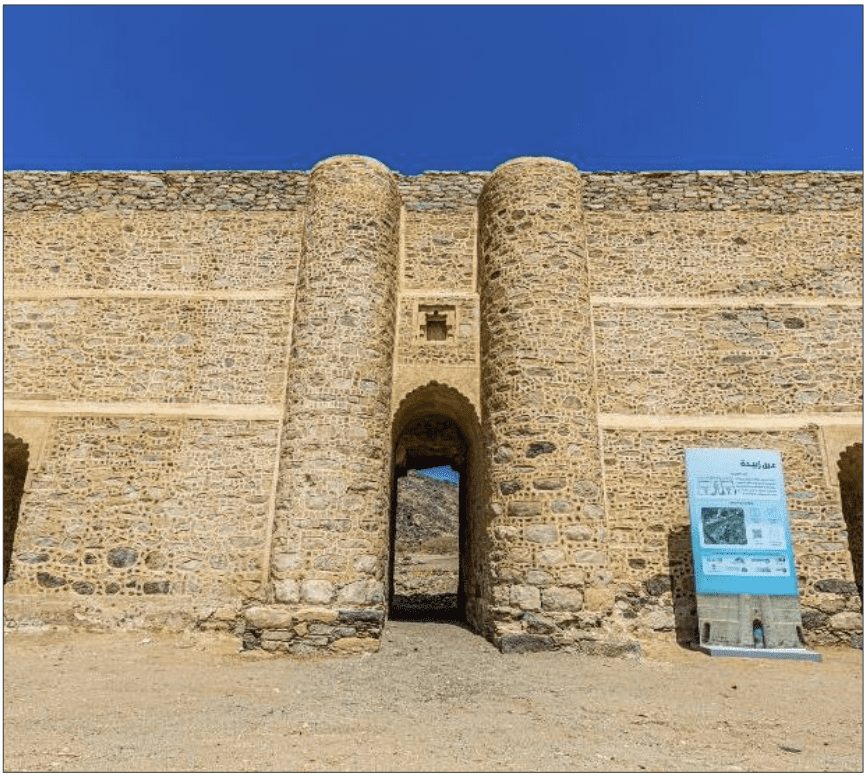
It is located in Wadi Na'man on the road between Taif and Makkah. It is named after Zubaida bint Ja'far, the wife of Caliph Harun al-Rashid, who ordered the delivery of water from the spring to Makkah in the year 174 AH (791 CE), after observing the hardships faced by pilgrims in fetching water from a place called Al-Uwajr at the base of Jabal Kura on the western side of the sacred area. The project took ten years, and the length of the channels extending to Makkah is 38 km. Subsequently, the Muslim caliphs, sultans, princes, and wealthy individuals took care of its renovation and construction. King Abdulaziz Al Saud ordered its restoration, and a special administration named Ain Zubaida was established to oversee and manage the spring and its associated wells, as well as their restoration.

View on the map
Sabil Umm Al Joud (King Abdulaziz's Sabils)

Sabil Umm Al Joud (King Abdulaziz's Sabils)

It is located to the west of Makkah, east of the western boundary markers of the Haram, on the old Jeddah - Makkah road. It was established in 1361 AH (1942 CE). The water openings in this public fountain (Sabil) are among the most numerous in the charitable water fountains built by King Abdulaziz Al Saud. It is the only fountain constructed at the beginning of the road leading to Makkah, serving travelers whether they are coming from or going to Makkah.

View on the map
Ain Hunayn

Ain Hunayn

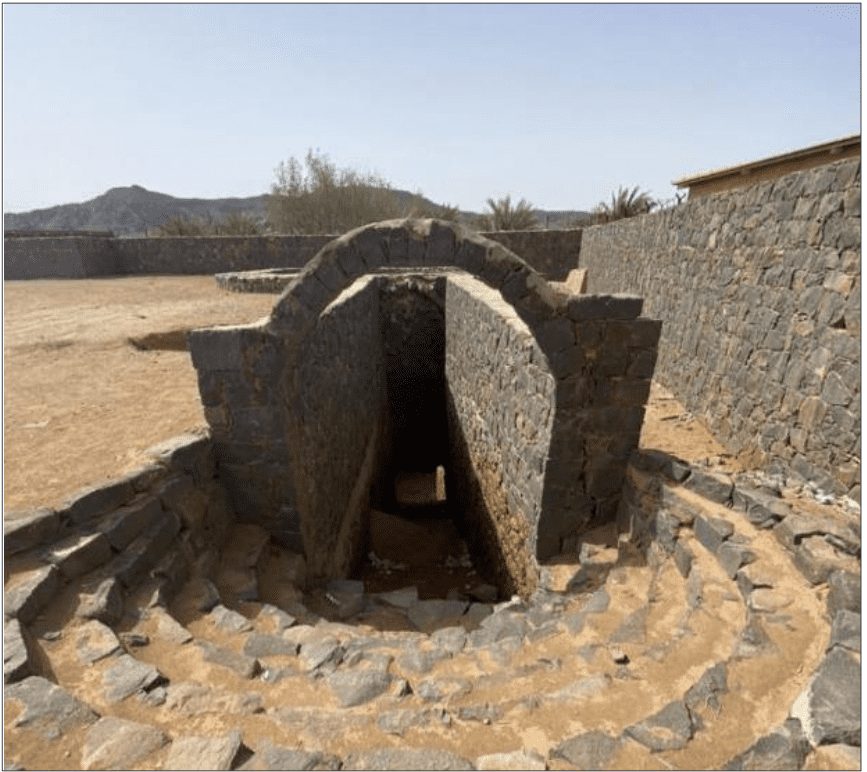
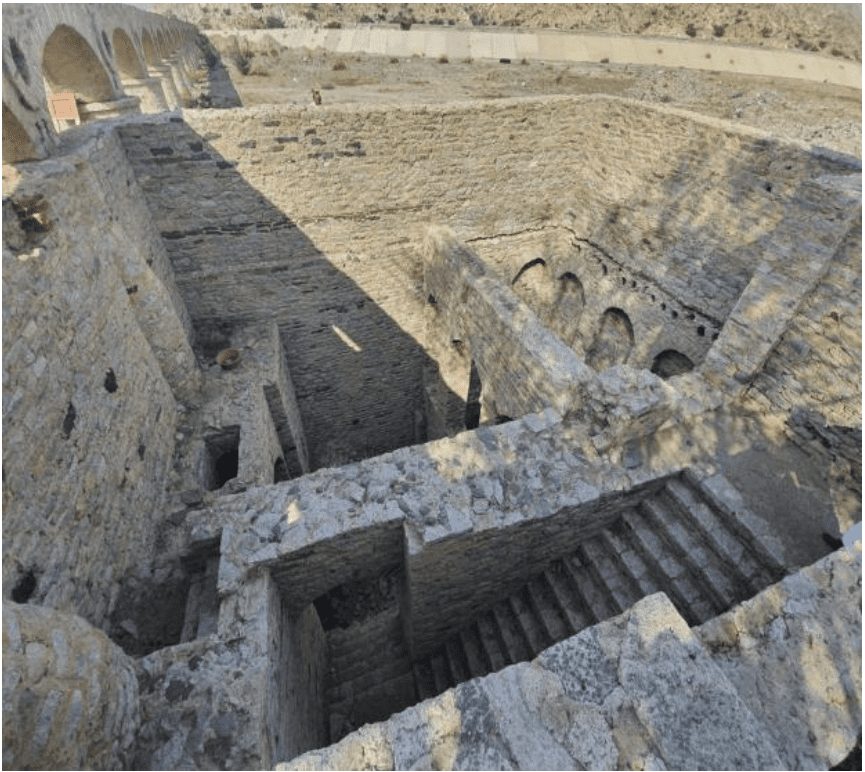
A fresh water spring located in the northeast of Makkah, in the Valley of Hunayn, where the Battle of Hunayn took place between the Muslims led by the Prophet Muhammad (peace be upon him) and the tribe of Hawazin and their allies in the eighth year of the Hijra / 630 CE. In it, Allah revealed: 'And [mention] the Day of Hunayn, when your great number pleased you, but it did not avail you at all' [Surah At-Tawbah, 9:25]. This spring was established by Zubaydah bint Ja'far, the wife of the Abbasid Caliph Harun al-Rashid, in the second century of the Hijra / seventh century CE, to provide water for pilgrims due to the scarcity of water in Makkah at that time. One of its notable features is the Hunayn aqueduct, which was built in a distinctive architectural style and flows into a pond on the opposite side of the valley.

View on the map
Sites of the Prophet's Migration Route - Al-Juhfa

Sites of the Prophet's Migration Route - Al-Juhfa

A large village located northwest of Makkah, named Al-Juhfa because the flood carried away its inhabitants. Al-Juhfa includes a mosque built by the Prophet Muhammad (peace be upon him) and serves as the miqat (ritual boundary) for people from Egypt, the Levant, and Maghreb who wish to perform Hajj or Umrah. Abdullah ibn Abbas (may Allah be pleased with him) reported: "The Prophet (peace be upon him) designated the miqat for the people of Madinah as Dhul-Hulaifa, for the people of the Levant as Al-Juhfa, for the people of Najd as Qarn al-Manazil, and for the people of Yemen as Yalamlam. These are the designated miqats for them and for those who come from outside these areas for Hajj or Umrah. For those who are closer, they can assume ihram (the sacred state) from where they start, even the people of Makkah from Makkah."

View on the map
Sites of the Prophet's Migration Route - Khulays

Sites of the Prophet's Migration Route - Khulays

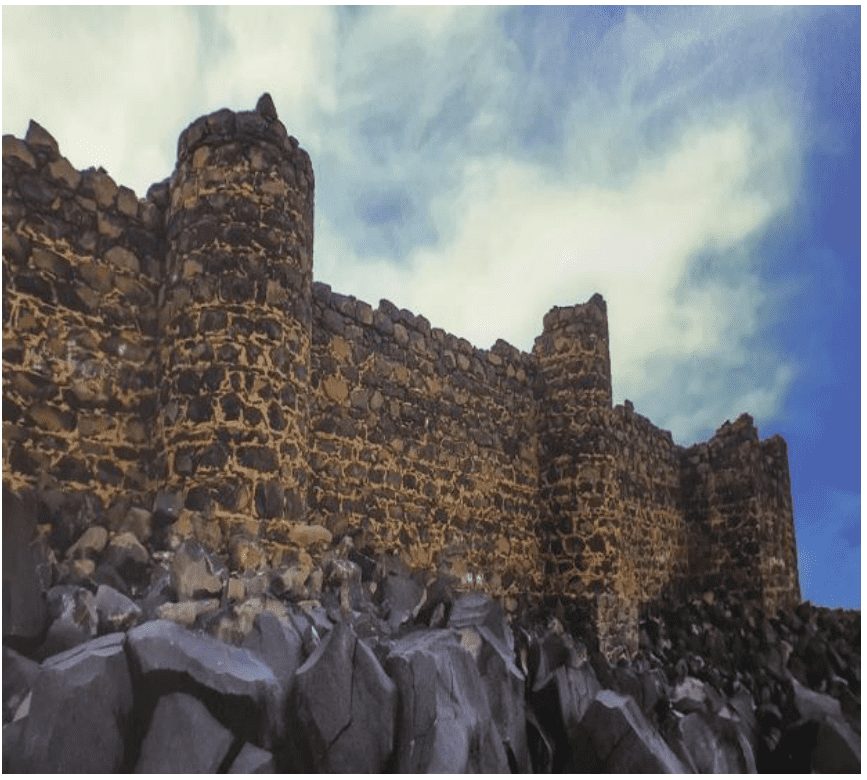
A city located between Makkah and Madinah to the northeast of Makkah. It was once a fortress and village, situated in a valley with abundant water, crops, and date palms. It has a large pond visited by pilgrims on their way to Makkah. It was an important station on the migration and pilgrimage route and also features a spring with abundant water.

View on the map
Sites of the Prophet's Migration Route - Al-Abwa'

Sites of the Prophet's Migration Route - Al-Abwa'

A large valley in the Hijaz region, now known as (Al-Khuraybah), where the grave of Amina bint Wahb, the mother of the Prophet, is located. Al-Abwa' witnessed the first military campaign of the Prophet in the second year of Hijra (624 CE). It was one of the caravan routes in pre-Islamic times between Makkah and Madinah, and after the advent of Islam, it became one of the important routes used by pilgrims traveling between Makkah and Madinah.

View on the map

Site descriptions, coordinates and photographs are sourced from the official Nusuk Makkah and Madinah locations guide (umrah.nusuk.sa). Simple Umrah is not affiliated with Nusuk or any government body. Access to some sites may change; always check locally before travelling.

Contact

Start Planning Your Umrah

Tell us about your preferred dates, number of travellers and package requirements, and we will help you explore suitable options.

Telephone
01908 040515
Mobile / WhatsApp
07595 936891
Do You Require Flights?

We only use your details to respond to your enquiry.